You should re-sole your shoes when the sole thickness falls below two millimeters, visible holes expose the footbed, or wear disrupts structural integrity. Shoes with Goodyear welt construction and intact uppers are ideal candidates for resoling, offering cost savings of up to 50% versus new pairs. Evaluate heel stability and strap condition for minor repairs, but consider replacement if damage exceeds repair value. Understanding these factors helps you make informed footwear maintenance decisions.
Key Takeaways
- Re-sole shoes when soles have visible holes, are thinner than 2mm, or show uneven wear affecting comfort and structure.
- Opt for resoling if the shoe uppers are intact and repairs cost less than half of new shoe price.
- Replace shoes if structural damage is extensive or materials are too worn for effective repairs.
- High-quality leather shoes with Goodyear welt construction are best candidates for resoling.
- Choose new shoes over resoling when repair costs approach or exceed 50% of buying new.
Signs Your Shoes Need Resoling

One of the most evident signs your shoes require resoling is the presence of visible holes in the soles, which directly expose the cork or footbed beneath. Such damage indicates that the sole has become worn-out and no longer provides appropriate support. When the sole thins to less than two millimeters, it risks compromising both the welt and internal structure, making timely repair essential. Additionally, uneven wear patterns on the sole suggest compromised shoe structure, affecting gait and comfort. If your shoes exhibit a significant loss of cushioning or the sole surface becomes rough and scuffed, it signals deterioration that typically necessitates professional resoling. Addressing these issues promptly helps restore the sole’s integrity, ensuring your shoes maintain proper support and extend their usable life. Choosing durable components like nylon or polyester laces can further enhance overall shoe longevity and performance.
Assessing the Overall Shoe Condition
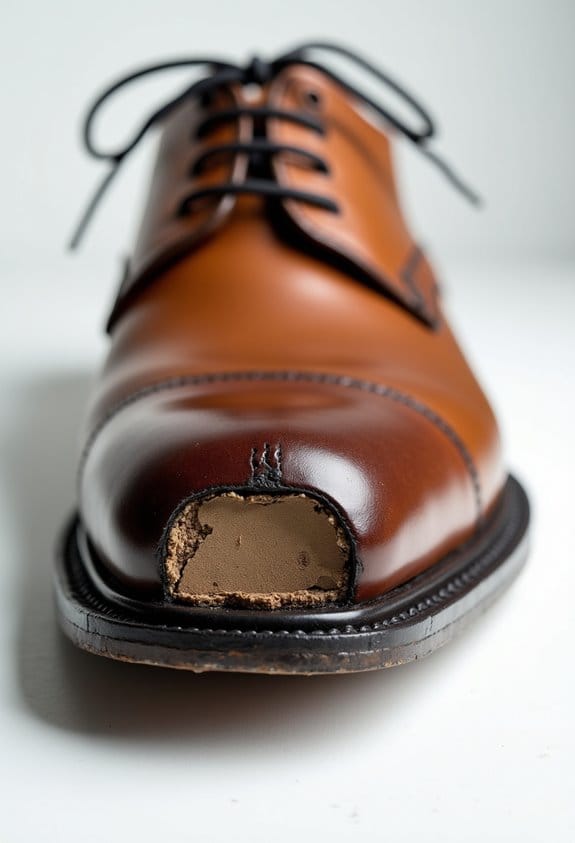
When evaluating whether your shoes require resoling, it is important to examine the overall condition beyond just the soles. Inspect for signs of wear and tear such as thinning, holes, or reduced traction on the worn-out sole, which indicate resoling is necessary to extend the life of quality shoes. Check the heels for wobbliness or unevenness, as damaged heels often require simpler repairs. Examine straps and buckles for looseness or breakage, since these impact functionality but are usually easy to fix. Additionally, worn insoles causing discomfort or visible damage can be replaced to restore comfort. However, if structural damage like cracked leather or torn fabric exceeds the shoe’s value, carefully consider whether to repair or replace the pair altogether to guarantee proper shoe performance and durability. Utilizing high heel tips replacement kits can provide an efficient and cost-effective solution for repairing damaged heels without needing to invest in new shoes.
Cost Comparison: Re-Sole vs. New Shoes

Evaluating the cost difference between resoling and purchasing new shoes requires understanding typical price ranges for each option. The cost comparison shows that half sole replacement generally ranges from €70 to €120, while full sole replacement costs between €130 and €200. These amounts are typically lower than buying new quality shoes, which can cost from €100 to €300 or more. Repair services for high-quality leather shoes can save you over 50% compared to acquiring new footwear. Moreover, investing in professional re-sole work helps maintain comfort and fit, avoiding uncertainty when buying new shoes. In addition, choosing resoling reduces environmental impact by minimizing footwear waste, unlike discarding old shoes which contributes notably to landfill volume and resource depletion. Using durable tools like carbon steel pliers can make shoe repairs more efficient and long-lasting.
Types of Shoes Suitable for Resoling

Durability and construction play key roles in determining whether shoes can be resoled effectively. High-quality leather shoes with Goodyear welt construction, especially boots priced over $400, are ideal candidates for resoling since their design supports multiple sole replacements without compromising integrity. Leather-soled dress shoes also qualify, provided the uppers remain solid and intact. Additionally, full rubber soles on hiking or work boots, typically costing $300 or more, can be replaced to maintain essential traction and support in demanding environments. Sneakers that feature substantial investment—generally over $100—and robust construction may be resoled depending on wear patterns, though this is less common. Cheaper materials typically do not withstand the rigors of resoling, making a new pair the more practical option when quality and durability are lacking. For those who experience foot discomfort during extended wear, incorporating orthotic insoles can enhance shoe comfort and support after resoling.
Heel Repairs and Other Minor Fixes

After determining that your shoes are suitable for resoling, attention should be given to heel repairs and minor fixes that often arise during regular wear. Heel replacement is typically the first step in shoe repair, costing between €15-30, and helps prevent further damage to heel lifts while extending shoe longevity. New heel lining repairs, which range from €25-60, involve inserting a new leather layer to improve comfort and durability. Minor fixes such as re-cementing a separated heel from the sole can be addressed quickly and inexpensively. Additionally, replacing worn elastics or broken buckles restores fastening functionality. To maintain shoe integrity and avoid costly replacements, it is essential to repair your shoes promptly when you notice these issues. Addressing these problems early preserves the shoe’s shape and extends usability effectively. Using high-quality heel plates can further protect against wear and extend the life of your footwear.
When Extensive Damage Warrants Replacement
When a shoe’s sole develops holes that penetrate to the footbed, or when leather components show extensive cracks and structural failures, replacement becomes necessary rather than repair. Extensive damage compromises the shoe’s integrity, making sole replacement insufficient to restore full functionality. If the cost of repairing shoes, including resoling and fixing structural issues, approaches or exceeds the price of a new pair of shoes, it is more practical to purchase new footwear. Repeated sole replacements may weaken the welt or reduce comfort and support. Additionally, poorly constructed shoes often cannot withstand effective repairs, further justifying replacement. Assess your shoes carefully, considering damage extent and repair expenses, to determine if investing in a new pair is the most efficient choice for maintaining foot protection and comfort. Also, understanding the bond strength needed for durable sole repairs can help evaluate whether a repair adhesive will provide a lasting fix or if replacement is the better option.
Tips for Extending the Life of Your Shoes
Numerous preventive measures can greatly extend the functional lifespan of your shoes, ensuring they maintain proper form and support. Regular cleaning and conditioning of leather prevents cracking and preserves appearance. Using shoe trees immediately after wear helps reduce upper leather creasing, maintaining shape. Inspect the soles frequently; when worn, timely repairs might include adding a half sole or resoling to avoid more extensive damage. Store shoes in a cool, dry place to prevent mold growth, which compromises material integrity. Apply protective sprays suited to your shoe’s material to guard against water and stains. Recognizing these maintenance tasks will prolong usability and delay the point when it’s time for a new pair, thereby giving your shoes renewed life through appropriate care rather than premature replacement. Additionally, keeping an eye on the recommended replacement frequency of insoles is vital, as this maintains foot health and overall shoe comfort during wear.
Frequently Asked Questions
How to Tell When Shoes Need Resole?
Shoe wear, outsole condition, and comfort level indicate when shoes need resoling. Excessive wear, discomfort, or uneven soles after seasonal use suggest repair. Cost comparison with new shoes helps decide if resoling is economical.
Is It Worth It to Get Shoes Resoled?
Like planting seeds for future harvests, resoling offers cost benefits by enhancing shoe longevity, preserving style and personal comfort while reducing environmental impact—making it a wise investment for durable, high-quality footwear’s sustained use and aesthetic appeal.
Why Go to a Cobbler Instead of Buying New Shoes?
Choosing a cobbler offers cobbler benefits like preserving shoe longevity through expert craftsmanship, providing a cost comparison favoring repairs, and supporting the sustainability factor by reducing waste—enhancing value beyond simply buying new shoes.
What Is the Old Wives Tale About Shoes?
The old wives’ tale suggests worn soles reflect hard work or neglect. Shoe longevity depends on repair methods and comfort factors, differing by shoe types. Repairing shoes reduces environmental impact by extending their usable life.