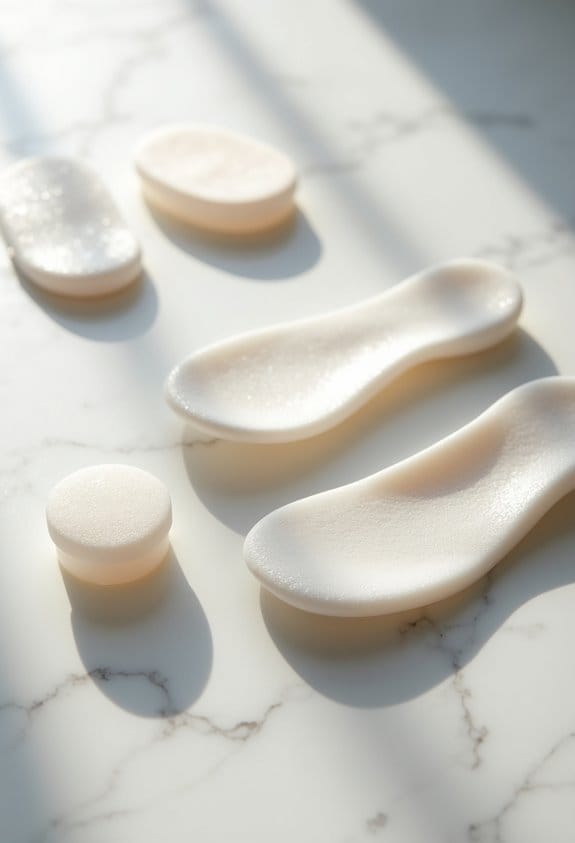

To fix loose fitting shoes, select a tongue pad size—Small/Medium or Large/X-Large—based on your foot and shoe tongue dimensions. Clean and dry the tongue surface thoroughly, then apply the self-adhesive pad just below the ankle to push the foot backward and reduce heel slippage. Press firmly for secure adhesion, ensuring the pad provides a snug but comfortable fit without misaligning the foot. Proper use stabilizes the heel and prevents foot sliding. Further details on application and benefits are available.
Key Takeaways
- Clean and dry the shoe’s tongue before applying the self-adhesive tongue pad for secure bonding.
- Select the appropriate tongue pad size based on foot dimensions and shoe tongue area for a snug fit.
- Position the pad just below the ankle on the tongue to push the foot backward and reduce heel slippage.
- Press the tongue pad firmly to ensure it stays in place and stabilizes foot movement during walking.
- Adjust pad placement if discomfort occurs, aiming for a secure yet comfortable fit without misalignment.
Understanding the Common Issues With Loose Loafers

Although loafers are designed for style and convenience, their naturally loose fit can cause functional problems that affect comfort and stability. The most frequent issue you will encounter is heel slippage, where the back of your foot lifts slightly with each step, reducing security. This happens primarily because loafers often lack sufficient support over the instep, allowing your foot to slide forward inside the shoe. Many users attempt to fix this by applying adhesive heel grips, but such measures may shift your foot’s alignment, leading to discomfort or imbalance. Instead, tongue pads provide an effective alternative by filling space on the shoe’s tongue, stabilizing the foot without forcing misalignment. Understanding these issues is essential before applying corrective measures like tongue pads. Additionally, using heel grips designed with high-elasticity cushioning can help reduce friction and prevent heel pain when needed.
What Are Tongue Pads and How Do They Work?

When addressing heel slippage in loose loafers, tongue pads serve as a practical corrective tool by filling the gap on the shoe’s tongue. A tongue pad is a self-adhesive insert placed directly on the shoe’s tongue to create a snugger fit. By pushing your foot back into the shoe, it reduces movement caused by inadequate instep support, stabilizing your heel during wear. This adjustment also distributes pressure more evenly, minimizing discomfort on the tongue area. Tongue pads come primarily in two sizes—Small/Medium and Large/X-Large—and are designed to accommodate variations in foot length for ideal comfort. Their application requires only seconds and can be done independently. Overall, a tongue pad improves shoe fit by maintaining the foot’s natural position, preventing slippage, and reducing potential injuries during walking or standing. Like foam heel grips, tongue pads often feature high-adhesive double-sided tape to ensure secure placement and comfort.
Selecting the Right Size of Tongue Pads for Your Shoes

Selecting the appropriate size of tongue pads is essential for optimizing shoe fit and preventing heel slippage effectively. When selecting the right size of tongue pads for your shoes, consider two size categories: Small/Medium and Large/X-Large. Choose a size that corresponds accurately to your foot dimensions and the shoe’s tongue area to guarantee comfort and proper alignment. The Small/Medium size suits tighter fits or larger shoes, while the Large/X-Large size is ideal for more substantial gaps. It is important to avoid pads that are too thick or thin, as this can cause discomfort or misalignment while walking. After selecting a size, test the fit in the shoe’s tongue region to confirm it provides the desired snugness before finalizing your decision. Using pads made of breathable materials can also enhance comfort during extended wear by reducing heat buildup.
Step-by-Step Guide to Applying Tongue Pads

Before applying tongue pads, thoroughly clean and dry the shoe’s tongue surface to confirm maximum adhesion and prevent slippage during use. Remove the backing from the self-adhesive tongue pad carefully, then align it on the shoe’s tongue just below the front of the ankle where it will best reduce heel slippage. Press the pad firmly to make sure it bonds securely to the surface. Positioning the pad correctly maintains natural foot alignment while minimizing movement within the shoe. If necessary, you can remove and reposition the pad to achieve an ideal fit. After removal, clean any adhesive residue with acetone to prepare for replacement. Use the appropriate size from the package, selecting Small/Medium or Large/X-Large, to fit the contours of either left or right shoes effectively. Choosing pads with a strong adhesive backing ensures they stay in place during walking or running.
Benefits of Using Tongue Pads Over Heel Grips

One key advantage of tongue pads over heel grips lies in their ability to prevent heel slippage by pressing the foot backward, maintaining natural alignment without inducing misplacement. Tongue pads provide a more precise fit by minimizing foot movement within the shoe, unlike heel grips that can cause inaccurate foot positioning. Their self-adhesive design guarantees easy application and removal without leaving sticky residue, which aligns well with proper foot care practices. Additionally, tongue pads accommodate variations in foot size, improving stability and comfort across multiple shoe styles. Priced affordably around €10, they offer an economical solution for enhancing shoe fit, reducing the need for costly replacements. Utilizing tongue pads supports healthier foot mechanics by maintaining proper alignment and reducing friction-related discomfort effectively. Moreover, incorporating customized insoles can further enhance the fit and comfort provided by tongue pads, especially for individuals with specific foot support needs.
Tips for Maintaining and Removing Tongue Pads
Regularly inspect the adhesion of tongue pads to guarantee they remain securely attached to the shoe’s tongue, reapplying them promptly if lifting or peeling occurs. Avoid applying excessive force when removing the pads to prevent damage or adhesive residue on the shoe material. To safely remove tongue pads, apply acetone or rubbing alcohol directly to dissolve the adhesive, which facilitates clean separation without harming the shoe. Store unused tongue pads in a clean, dry area to maintain adhesive integrity before application. Replace the pads immediately when they lose stickiness or show wear to sustain proper fit and heel control. If you encounter difficulties or unusual issues during maintenance or removal, let us know so appropriate guidance can be provided for specific shoe types or materials. Additionally, using shock absorption technology in your footwear can enhance overall comfort and reduce foot fatigue when wearing shoes with tongue pads.
Alternative Solutions for Loose Shoe Fit
Several effective alternatives to tongue pads exist for addressing loose shoe fit, including adhesive heel grips designed to minimize heel slippage by creating friction and additional padding. As loose heel fit is a common reason shoes feel unstable, heel grips can improve secure contact between your foot and shoe. However, incorrect placement may cause foot misalignment and variable comfort levels. Brands like Pedag manufacture these grips, yet reviews often note inconsistent adhesion quality and persistent sticky residue after removal. Thicker heel grips, which might offer more substantial support, are scarce, with most products providing similar padding thickness around 2-3 millimeters. Because quality differs between brands, it is important to review user feedback and test several options to guarantee reliable performance without compromising shoe integrity or foot biomechanics. For best results, ensure strong adhesive bonding when selecting heel grips to maintain durability and comfort.
Real User Experiences and Recommendations
User feedback reveals that tongue pads commonly improve the fit of loose shoes by securely positioning the foot against the insole and preventing heel slippage, which enhances stability during movement. Many users report that when shoes feel loose around the midfoot or heel, inserting a 3-5 mm tongue pad beneath the shoe’s tongue effectively reduces excess space. Compared to heel grips, tongue pads distribute pressure more evenly and minimize discomfort, providing a stable walking experience. Recommendations include applying tongue pads in casual loafers and athletic shoes where looseness is evident, as they accommodate various shoe designs. Monitor comfort levels when wearing tongue pads; slight adjustments may be necessary to avoid excessive tightness. Peer discussions emphasize sharing these practical steps to assist others facing loose-fitting shoe challenges. Additionally, selecting tongue pads made from breathable, eco-friendly materials can enhance comfort by minimizing sweat and irritation during prolonged wear.
Frequently Asked Questions
How to Make a Loose Shoe Fit Tighter?
To make a loose shoe fit tighter, one effective shoe adjustment involves placing cushioned inserts or tongue pads inside the shoe. This increases snugness, reduces heel slippage, and enhances overall foot stability during wear.
How to Use a Shoe Tongue Pad?
Like a silent guardian, a shoe tongue pad enhances shoe comfort by firmly adhering to the shoe’s tongue, securing the foot’s position and preventing slippage. Proper placement and sizing guarantee an ideal, snug fit throughout wear.
How to Fix a Loose Shoe Tongue?
A loose shoe tongue can be fixed by selecting appropriate tongue materials, such as padded or firmer fabrics, and securing them with tongue pads or adhesive strips, improving fit and preventing slippage while maintaining comfort and foot support.
Do Tongue Pads Help Heel Slippage?
Tongue pads effectively reduce heel slippage by providing a snug fit without relying on traditional heel grip methods. Unlike heel grips, they support the instep, preventing foot misalignment and improving overall shoe comfort and stability.