

Shoe soap uses natural fats and alkalis in saponification, creating a gentle, slightly alkaline cleaner ideal for delicate materials like leather and suede. It emulsifies dirt without harsh chemicals, preserving shoe integrity and being biodegradable. Shoe detergent contains synthetic surfactants that provide powerful cleaning, especially for synthetic fabrics and rubber soles, but can strip oils and leave residues. Selecting between them depends on shoe material and grime level; further detail clarifies their specific roles and impacts.
Key Takeaways
- Shoe soap is made from natural fats and alkalis, offering gentle, mild cleaning ideal for sensitive shoe materials like leather and suede.
- Shoe detergent contains synthetic surfactants and advanced agents for powerful cleaning, suitable for tougher stains and synthetic fabrics.
- Natural ingredients in shoe soap help maintain shoe integrity and offer biodegradability, while detergents may damage materials and leave residues.
- Detergents efficiently remove dirt but risk stripping leather oils and causing residue buildup in mesh or fabric insoles.
- Choosing shoe soap reduces environmental impact and health risks, while detergents may cause irritation due to synthetic chemicals.
Defining Shoe Soap and Detergent

Although both shoe soap and detergent serve the purpose of cleaning footwear, they differ greatly in composition and function. Shoe soap is produced through saponification, a chemical reaction combining natural ingredients like fats and alkalis, resulting in a gentle cleaning product. Shoe detergent, on the other hand, contains synthetic cleaners and advanced cleaning agents formulated to address tougher stains on various footwear materials. Due to its natural composition, shoe soap is best suited for sensitive materials, preventing damage during cleaning. In contrast, shoe detergent’s synthetic surfactants offer powerful cleaning capabilities, especially for heavily soiled shoes, while often being free-rinsing to avoid residue buildup. When selecting between the two, consider your shoe’s material type and the level of grime to guarantee effective and safe cleaning results. For example, eco-friendly ingredients in some shoe cleaners ensure powerful cleaning without harsh chemicals, making them suitable for a broad range of footwear.
Key Ingredients and Their Impact on Footwear
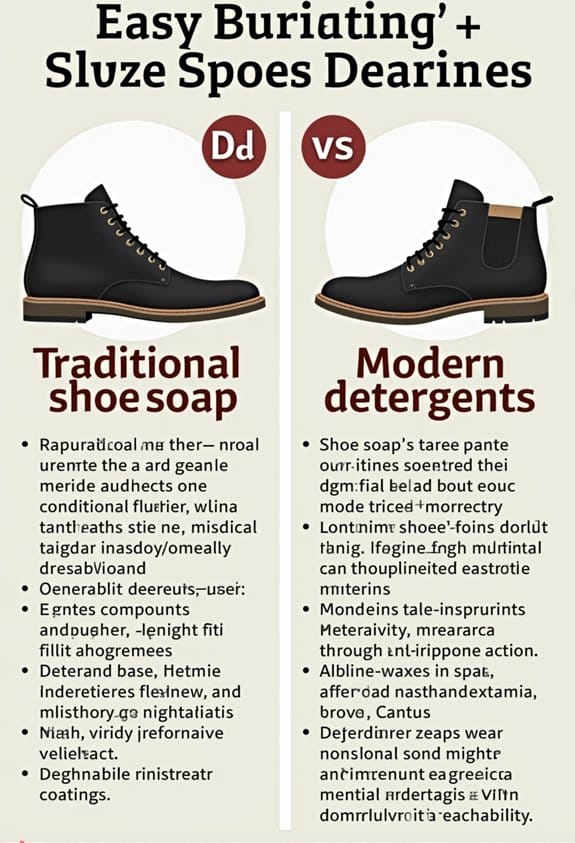
The key ingredients in shoe soap and detergent play a significant role in their cleaning effectiveness and material compatibility, so you should carefully consider their chemical composition. Shoe soap typically uses natural ingredients like plant oils and fats, providing a gentle cleaning action suited for sensitive fabrics and materials. These soaps maintain a neutral to slightly alkaline pH level, preserving shoe integrity and offering an eco-friendly, biodegradable option. In contrast, detergents often contain synthetic surfactants, enhancing effective cleaning but potentially stripping protective coatings or degrading materials over time. Additionally, detergents may include fragrances and colorants that leave residues, which can harm delicate footwear. Understanding these differences helps you select the appropriate product, ensuring effective cleaning without compromising material durability or environmental considerations. For optimal leather care, choosing cleaners with natural moisturizers is essential to restore shine and maintain suppleness.
Cleaning Mechanisms: Gentle Care vs. Powerful Cleaning

When selecting a cleaning agent for footwear, understanding the distinct cleaning mechanisms behind shoe soap and detergents is crucial. Shoe soap provides gentle care by utilizing natural ingredients that emulsify dirt and oils without harsh chemicals, making it ideal for delicate surfaces. In contrast, detergents offer powerful cleaning through synthetic surfactants, which attach to dirt particles and repel water to guarantee effective stain removal without redepositing grime. These surfactants enable detergents to handle tougher cleaning tasks on various materials. While shoe soap maintains biodegradability and mild action, detergents are engineered for thorough, efficient cleaning across diverse shoe conditions. Recognizing these cleaning mechanisms helps you choose the appropriate product for maintaining shoe appearance without compromising material integrity. Proper storage solutions, such as boot hangers with rubber-coated tips, can further help preserve the condition of cleaned footwear by preventing material damage.
Effects on Different Shoe Materials

Since shoe materials vary greatly in texture and composition, selecting the appropriate cleaning agent requires understanding their chemical interactions. Shoe soap, containing natural surfactants and balanced pH levels, is suitable for delicate materials like leather and suede, minimizing drying or discoloration risks. Detergents, often formulated with synthetic surfactants, can effectively clean synthetic fabrics and rubber soles but may strip natural oils from leather, causing cracking. When addressing synthetic shoe materials such as mesh or fabric insoles, detergents may enhance cleaning performance, yet you must avoid residue buildup that can impair breathability and comfort. Overall, you should match cleaning agents carefully with shoe materials to maintain structural integrity and appearance, applying shoe soap for delicate materials and detergents cautiously on synthetics to optimize cleaning efficiency without damage. Additionally, considering the use of rubber sole protectors can help reduce wear on shoe soles after cleaning.
Environmental and Health Considerations

Consideration of environmental and health impacts plays a significant role when choosing between shoe soap and detergent for footwear care. Shoe soaps typically contain natural ingredients, making them more biodegradable and reducing their environmental footprint compared to detergents that frequently include synthetic chemicals and petroleum-based components. The production process of shoe soap generally uses fewer resources, further lessening environmental harm. Additionally, natural glycerin retained in shoe soap helps maintain shoe material integrity, whereas detergents often strip away oils and moisture. For cleaning purposes, shoe soaps minimize harmful residues left on footwear, which can reduce health impacts such as skin irritation or allergic reactions caused by synthetic chemicals in detergents. Consequently, selecting shoe soap may provide both ecological benefits and a lower risk of negative health effects associated with footwear cleaning products. Moreover, using products compatible with waterproof materials ensures cleaning does not compromise the shoes’ protective properties.
Choosing the Right Product for Your Shoes
Although detergents may offer stronger stain removal, selecting the appropriate cleaning product requires careful evaluation of your shoe’s material composition and the product’s formulation. For leather and delicate materials, choose a shoe soap formulated with natural oils to maintain flexibility and prevent drying or cracking. Avoid detergents derived from synthetic sources, as they often leave residues that damage sensitive fabrics. When cleaning a wool sneaker, a mild shoe soap is essential to avoid fiber weakening or discoloration. Inspect cleaning products for free-rinsing properties, ensuring no residues remain to affect shoe integrity. Detergents may be suitable for synthetic materials requiring intensive stain removal, but monitor for adverse effects and rinse thoroughly. Proper selection preserves shoe structure, appearance, and lifespan through material-specific care. Additionally, using products with moisture management features helps maintain shoe hygiene and comfort during and after cleaning.
Frequently Asked Questions
Can You Use Regular Detergent to Wash Shoes?
Regular detergent can be used cautiously for shoe care, considering fabric types and shoe materials. Hand washing is preferred for delicate materials; machine washing suits sturdy shoes. Proper drying techniques and cleaning frequency aid stain removal and odor elimination.
How to Distinguish Between Soap and Detergent?
Over 60% of consumers confuse soap composition with detergent ingredients. Soap, with natural fats, offers gentler cleaning, minimal residue, and lower environmental impact, while detergents excel in stain removal, fabric compatibility, and work better in varied water temperatures.
Is It Better to Clean Shoes With Dish Soap or Detergent?
Detergent generally offers more effective cleaning solutions for shoe cleaning methods, ensuring materials safe for shoes and enhancing shoe longevity factors. Dish soap advantages include grease removal, but eco-friendly detergents excel in stain removal techniques and footwear care tips.
Can I Use Dawn Dish Soap to Clean Leather Shoes?
Dawn dish soap can be used cautiously for leather care due to its cleaning properties, but proper cleaning techniques—including dilution and leather conditioning—are essential for shoe maintenance, ensuring fabric safety, stain removal, and preserving footwear materials with eco-friendly household cleaning.


