

To dry wet sneakers properly and prevent damage, remove insoles and laces to enhance air circulation, then stuff the shoes with plain newspaper or silica gel packets to absorb moisture without deforming materials. Avoid heat sources above 104°F, which can weaken adhesives and shrink fabrics. Place the sneakers in a well-ventilated area or use a room fan for efficient drying. Changing absorbent materials regularly accelerates moisture removal while maintaining shape. Additional techniques guarantee longevity and odor control.
Key Takeaways
- Remove laces and insoles to enhance airflow before drying to speed moisture evaporation and prevent mold growth.
- Stuff sneakers with crumpled newspaper or silica gel packets to absorb moisture while maintaining shape without heat damage.
- Air dry sneakers in a well-ventilated area, avoiding direct sunlight and heat sources above 104°F (40°C) to prevent material weakening.
- Use a room fan to circulate air and accelerate drying safely without exposing sneakers to mechanical or thermal stress.
- Avoid dryers, radiators, or hair dryers as high heat and tumbling can damage adhesives, shrink materials, and distort sneaker shape.
Why Proper Drying of Wet Sneakers Matters

Guaranteeing proper drying of wet sneakers is essential to inhibit mold and bacterial growth, which can produce unpleasant odors and degrade materials over time. Effective drying methods include air drying in a well-ventilated area to avoid exposure to high temperatures that weaken adhesives and fabrics. You should prevent damage by absorbing moisture with materials like newspaper or silica gel, which protect the sneaker’s internal structure and maintain its original shape. Avoid letting dampness persist too long, as prolonged moisture causes deformation and potential cracking, especially in leather and suede components. Proper drying preserves the sneakers’ strength and fit, preventing discoloration and adhesive breakdown. Employing these strategies guarantees the longevity of your sneakers by managing moisture efficiently through controlled environmental conditions and selective drying techniques. Using a shoe dryer with an auto shut-off feature can enhance safety and prevent overheating during the drying process.
Preparing Sneakers for Drying

Before initiating the drying process, you must remove the laces and insoles from the wet sneakers to facilitate improved air circulation and promote uniform drying. Next, clean the sneakers thoroughly using warm water mixed with a mild detergent to eliminate dirt and debris. Gently shake out any excess water to expedite the drying process and prevent moisture from pooling inside. Loosen the openings by adjusting the laces, which helps enhance airflow and accelerates drying. To maintain their shape during drying, stuff the sneakers with a moisture-absorbing product such as silica gel or crumpled newspaper. This step also aids in absorbing residual moisture, reducing drying time. Proper preparation guarantees effective moisture evaporation, reduces the risk of damage, and prepares sneakers adequately for the subsequent drying stages. Additionally, removing and properly caring for washable insoles with moisture-wicking fabrics helps keep the interior fresh and dry.
Removing Insoles and Laces for Faster Drying

Remove the insoles and laces promptly after the sneakers become wet to promote airflow and expedite drying. Removing insoles exposes the shoe’s interior, increasing air circulation and reducing moisture retention that delays the drying process. Insoles should be dried separately to guarantee thorough evaporation, which prevents mold growth and bacterial buildup. Similarly, loosening and taking out laces allows the shoe to open fully, maximizing surface area exposed to air and allowing faster moisture removal. This approach helps preserve integrity by preventing deformation caused by trapped wet materials. Additionally, drying insoles and laces independently mitigates odor formation, as damp components often generate unpleasant smells if left confined. Adhering to this method maintains your footwear’s shape and hygiene during the drying process effectively and efficiently. Using open designs in shoe storage after drying can also promote airflow and further protect your shoes from moisture buildup and damage.
Using Newspaper to Absorb Moisture Effectively
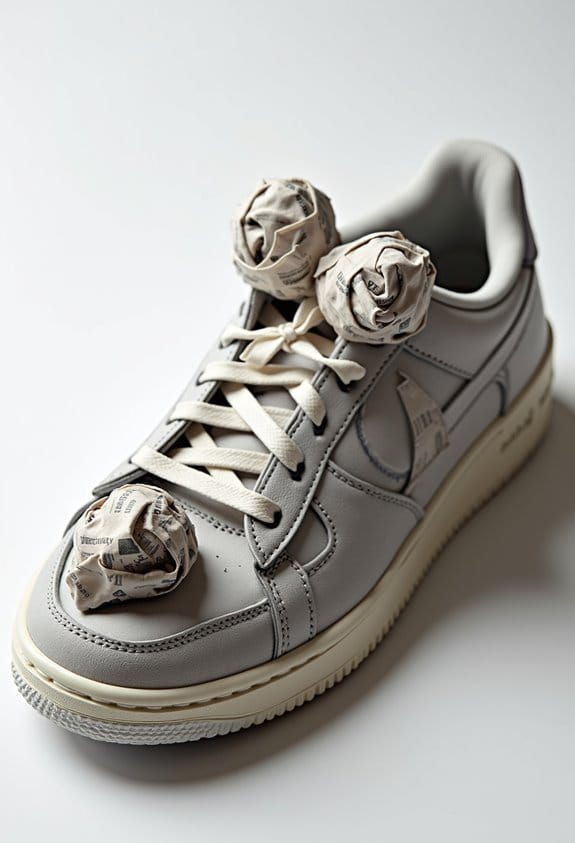
Several sheets of crumpled newspaper inserted inside your wet sneakers can markedly accelerate moisture absorption while maintaining the shoe’s structural integrity. To optimize drying effectiveness, properly loosen laces and remove insoles before you stuff the newspaper, allowing improved airflow within the shoe. It is essential to change the damp newspaper every few hours to sustain absorb moisture efficiency and prevent ink transfer, particularly on light-colored interiors. Using plain white or unprinted newspaper further reduces the risk of staining. This method maintains the shoe shape by providing gentle internal support as the paper absorbs moisture. Typically, drying times with newspaper take about 12 hours, influenced by how effectively you manage newspaper replacement and shoe ventilation. This approach offers a reliable balance between drying speed and preserving sneaker condition.
Accelerating Drying With a Room Fan

To enhance the moisture removal process beyond newspaper absorption, position your wet sneakers directly in front of a room fan to increase airflow. The fan accelerates drying by circulating air around the shoes, which effectively reduces drying time compared to passive air drying. Hang laced sneakers by their laces on the fan grille to avoid direct contact and prevent damage, while placing non-laced shoes upright nearby. Running the fan for several hours in a well-ventilated area helps evaporate excess moisture safely without exposing shoes to damaging heat. Placing a towel under the fan catches any dripping moisture, keeping your workspace clean. This method allows you to speed up drying while minimizing risk, ensuring you safely dry delicate sneakers with improved efficiency and controlled environmental conditions. For even greater drying efficiency and material care, consider using devices with adjustable timers to prevent overdrying and prolong shoe life.
The Role of Silica Gel Packets in Moisture Removal
Silica gel packets serve as highly efficient desiccants capable of absorbing up to 40% of their own weight in moisture, making them particularly suitable for drying wet sneakers. To promote effective moisture removal, place several silica gel packets inside and around your sneakers, especially when drying leather and suede, as this method prevents damage while maintaining their structural integrity. These packets operate at room temperature, avoiding the risks associated with heat-based drying techniques. Using silica gel in shoe storage also enhances maintenance by reducing mold and odors caused by damp environments. Their absorbing capacity can be restored by drying them in a low-heat oven, making silica gel packets reusable. Incorporate these packets consistently to maintain a dry environment, ensuring your sneakers remain in prime condition during and after drying. Additionally, using breathable storage solutions like stackable acrylic shoe boxes can further protect your sneakers from moisture buildup during storage.
Benefits of Air Drying in a Well-Ventilated Space
A well-ventilated space provides an ideal environment for air drying wet sneakers by allowing moisture to evaporate efficiently, typically within two hours to overnight depending on humidity and temperature. This drying method promotes faster moisture removal through proper airflow, which is critical to prevent damage and maintain the shoe’s structure. Ensuring adequate air circulation eliminates risks of mold and bacterial growth, thereby preventing unpleasant odors. You should remove insoles and loosen laces to enhance airflow inside the shoe, which further supports efficient drying. Using this method also protects sensitive materials like leather and suede by avoiding exposure to damaging heat sources. Overall, air drying shoes in a well-ventilated space provides a balanced, effective solution that safeguards material integrity while optimizing drying time and performance.
How to Avoid Heat Damage When Drying Sneakers
When drying wet sneakers, avoid direct heat sources such as hair dryers, radiators, or heaters, as temperatures above 104°F (40°C) can weaken adhesive bonds and deform materials. To dry your sneakers effectively, remove insoles and loosen laces to improve air circulation inside the shoes. Always air dry your shoes in a shaded, well-ventilated area to prevent fading and degradation from sunlight. To speed up the drying process without risking heat damage, consider using a fan that circulates air gently around the sneakers. High heat can cause materials to shrink, crack, or become brittle, so avoid using heat-based methods. Additionally, keep your sneakers elevated to avoid humidity trapping moisture, which can slow drying and promote odor or mold growth. Using a boot dryer with adjustable heat settings can also provide gentle drying without damaging your shoes.
Risks and Considerations When Using a Dryer
Several risks accompany the use of a dryer for wet sneakers, primarily involving heat and mechanical stress. When placing shoes in the dryer, exposure to high temperatures can cause heat damage by weakening glue and causing materials like leather to shrink, warp, or crack. Tumbling shoes during the drying process may lead to loss of shape because soft parts can become crushed or distorted. Improper drying may also cause wear and tear on the dryer itself, especially if shoes become tangled or excessively heavy inside the drum. Additionally, the disruptive noise generated by tumbling shoes can be problematic in shared living spaces. Understanding these risks is essential before using a dryer, as the mechanical and thermal stresses involved often outweigh any convenience gained by fast drying. To maintain footwear comfort and durability, it is advisable to use ventilation holes or micro-perforations in materials that aid breathability and reduce moisture buildup.
Techniques for Drying Sneakers Overnight
Although rapid drying methods may seem convenient, employing controlled overnight techniques guarantees the structural integrity and longevity of sneakers. To begin, remove the insoles and laces to enhance air circulation inside the shoes. Stuff the sneakers with crumpled newspaper or paper towels that absorb moisture effectively, and change them out every few hours to maintain drying efficiency. Place the shoes in a well-ventilated area to promote consistent air circulation without using direct heat. Introducing silica gel packets inside the sneakers further absorbs excess moisture safely. It is essential to avoid placing sneakers in direct sunlight, as this can fade colors and damage adhesives. These methods help maintain the shoe’s shape and prevent deformation during the drying process, ensuring your sneakers remain durable and properly dried by morning. Utilizing an electric boot dryer with adjustable heat and timer settings can also provide uniform drying while protecting the shoe material.
Eliminating Odors From Wet Sneakers During Drying
How can you effectively eliminate odors from wet sneakers during the drying process? Begin by sprinkling about two tablespoons of baking soda inside each shoe to absorb moisture and neutralize bad smells. Allow it to sit overnight before shaking out the residue. Wipe the interior surfaces with a cloth soaked in a 1:1 vinegar and water solution; this helps to further neutralize lingering odors. Make certain you remove moist insoles and replace them with breathable, quality alternatives designed to reduce moisture retention. Maintain consistent ventilation around the sneakers during drying to prevent mold and mildew growth, common sources of odors. Regularly check for moisture buildup and replace any damp newspapers or paper towels used as absorbents to sustain a fresh drying environment throughout the process. For enhanced odor control, consider applying a sweat-activated deodorizer spray that targets odor-causing bacteria during and after drying.
Preventive Tips to Keep Sneakers Dry Longer
Maintaining your sneakers’ dryness requires proactive measures that reduce moisture absorption and accumulation. Regular dirt removal prevents bacteria and odor buildup, which occurs when dirt traps moisture in shoe materials. Store your sneakers in a well-ventilated area with airflow exceeding 1 cubic foot per minute to avoid damp environments promoting mold growth. Apply waterproofing sprays tailored to your sneaker materials to establish a protective barrier that repels water and minimizes damage. Avoid exposure to puddles or muddy terrains, as these greatly increase moisture accumulation in laces, insoles, and fabric layers. Periodically inspect these components for dampness, replacing or thoroughly drying them if needed. These preventive tips, when consistently applied, will effectively keep sneakers dry longer and extend their functional lifespan. Using insoles made from waterproof materials can further enhance moisture resistance and comfort inside your sneakers.
Frequently Asked Questions
How to Dry Wet Shoes Without Damaging Them?
To dry wet shoes without heat damage, one should use air circulation and drying racks, employ the towel method or newspaper stuffing for moisture control, avoid harsh cleaning solutions, and focus on sneaker materials to guarantee odor removal and effective drying techniques.
How Long Does It Take for Wet Sneakers to Dry?
Drying time for wet sneakers varies by sneaker material, moisture levels, and drying methods. Effective air circulation, ideal temperature impacts, and weather effects influence fabric care and sneaker maintenance, ensuring proper odor control and timely drying between several hours to overnight.
What to Dry Sneakers On?
Sneakers should be dried on absorbent towels or drying mats paired with drying accessories promoting airflow. Effective drying methods avoid heat, consider material sensitivity, support natural drying techniques, and align with sneaker care advice to prevent mold growth and maintain waterproofing.
Is It Safe to Put Sneakers in the Dryer?
Dryers dance dangerously with sneakers: heat exposure risks sole separation, fabric shrinkage, and material integrity loss. Repeated drying cycles cause lifespan reduction, odor retention, and moisture retention. Proper sneaker care avoids dryer damage whenever possible.


