


Aglets date back to ancient Rome, originally crafted from metal and measuring 5 to 10 millimeters, preventing shoelace fraying and aiding threading through eyelets. Through medieval times, materials shifted to leather, bone, or metal, reaching sizes of 10 to 20 millimeters and serving decorative as well as functional roles. The Industrial Revolution introduced mass production, while 20th-century trends favored lightweight plastic aglets, which now make up about 80% of usage. Their design enhances durability, tensile consistency, and aesthetics. Further exploration reveals advances in materials and customization techniques.
Key Takeaways
- Aglets originated in ancient Rome, primarily made from metal, glass, or stone to secure shoelaces and prevent fraying.
- In the Middle Ages, aglets evolved into leather, metal, or bone designs, reflecting social status and serving decorative purposes.
- The Industrial Revolution enabled automated aglet production, increasing availability and affordability while supporting customization.
- The 20th century shifted aglet materials from metal to lighter, cost-efficient plastic, now making up about 80% of production.
- Aglets play vital functional roles by preventing lace unraveling, easing threading, maintaining tension, and enhancing shoelace durability and aesthetics.
Origins and Early Uses of Aglets
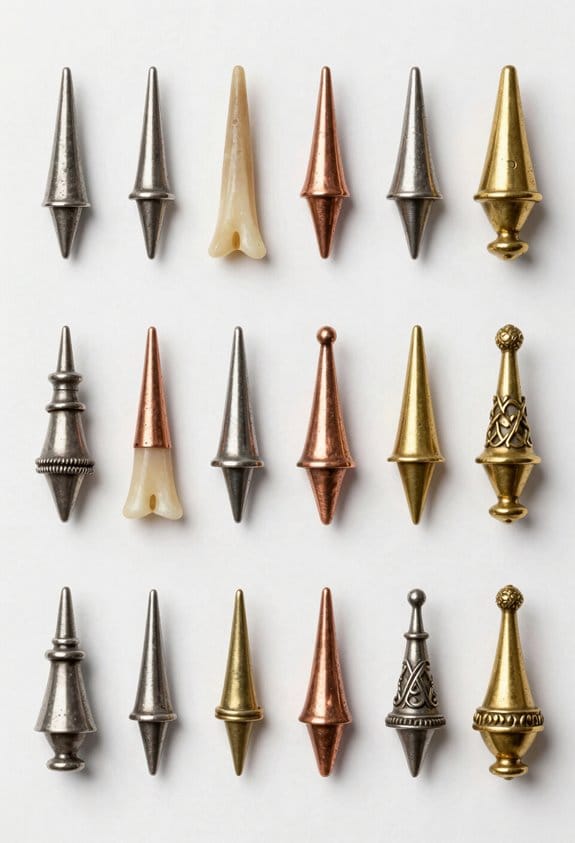
Although aglets are often overlooked, their origins trace back to ancient Rome, where small tips made from metal, glass, and stone were carefully shaped to secure shoelaces and prevent fraying. These aglets served a dual function: they reinforced the end of shoelaces and facilitated easier threading through eyelets or holes. Early aglets typically measured between 5 to 10 millimeters in length, crafted to tightly encase the shoelace tips. Metal was favored for durability, though materials varied by availability and purpose. Over time, the use of plastic emerged, especially during industrial advancements, to replace metal for cost-effectiveness and mass production. Understanding this evolution helps you appreciate how aglets contribute both functionally and materially to modern footwear, ensuring shoelace longevity and convenience through precise, engineered design. Just like modern bamboo shoe racks combine durability and eco-friendliness, aglets have evolved to offer practical benefits alongside efficient material use.
Aglets Through the Middle Ages

The significance of aglets evolved particularly during the Middle Ages, when their construction relied on materials such as leather, metal, or bone, measuring typically between 10 and 20 millimeters to guarantee durability and ease of use. You should understand that these aglets served both functional and decorative purposes by preventing the fraying at the end of a shoelace while adding ornamental value. Additionally, aglets were used to fasten clothing, since buttons were not common yet, demonstrating their versatile role in medieval attire. Often, aglets featured intricate designs reflecting the wearer’s social status, with references appearing even in literature. Recognizing these historical applications helps you appreciate the foundational development of aglets before their mass production in subsequent centuries. Aglets from this era therefore represent significant advancements in shoelace technology and fashion. Durable materials like metal aglets have long been valued for their ability to prevent fraying and ensure the longevity of shoelaces.
The Industrial Revolution’s Impact on Aglet Production

When the Industrial Revolution introduced mechanized production methods, you should recognize that aglet manufacturing shifted from manual craftsmanship to automated processes, increasing output efficiency to thousands per hour. This change enabled the mass production of aglets, making them more accessible and affordable compared to handcrafted versions. Machinery advancements, such as injection molding, allowed the use of plastic aglets, which were lightweight and cost-efficient. The industrial processes supported the production of aglets in various colors, widening design options and appealing to diverse consumer preferences. As a result, aglets evolved beyond utility, becoming customizable accessories that reflect personal style. Understanding this historical shift helps you appreciate how industrialization transformed aglet manufacturing from artisanal to standardized production while addressing demand for both function and fashion. Cleaning and maintenance innovations similarly enhanced the longevity and appearance of shoe components, including aglets, by employing effective cleaning tools adapted for various materials.
Transition From Metal to Plastic Aglets
Since the 20th century, aglet manufacturing has shifted considerably from metal to plastic materials due to demands for lighter, cost-efficient alternatives. This change from metal to plastic aglets enabled shoelace tips to become remarkably more lightweight, reducing overall footwear weight by up to 30%. Plastic aglets also allowed manufacturers to produce a broad spectrum of colors and finishes, enhancing customization and branding opportunities. Historically, metal aglets made from brass or copper offered durability and a premium feel, but their heavier weight and higher production costs limited widespread use. Today, approximately 80% of aglets are plastic, thanks to improved mass production techniques that increase availability and affordability. Additionally, the industry is investigating sustainable alternatives, including biodegradable and recycled plastics, to address environmental concerns while maintaining these material benefits. Innovations in waterproof and flexible bonding materials have also influenced the shift in manufacturing practices by improving the durability and functionality of plastic aglets.
Functional Purposes of Aglets in Footwear
Aglets perform essential functions that directly impact shoelace performance and durability, preventing fibers from unraveling and extending the usable life of the lace. These small components enable smoother threading of shoelaces through the eyelets found in athletic footwear, ensuring a secure fit and consistent tension. Without aglets, shoelaces risk fraying rapidly, which compromises their functionality and requires more frequent replacements. Typically made from plastic, aglets offer a lightweight, cost-effective solution, while metal aglets provide enhanced durability for demanding activities. Additionally, some aglets incorporate reflective materials, improving visibility during low-light conditions to enhance safety. Understanding these functional purposes allows users to appreciate how aglets contribute not only to the longevity of shoelaces but also to the overall performance of athletic footwear, making them indispensable in everyday use. Metal aglets, especially those made of stainless steel, resist wear and rust, making them a durable choice for prolonged use.
Aglets as Decorative Elements
The small tips at the ends of shoelaces serve more than just practical roles; they also enhance the visual appeal of footwear through varied designs and materials. Over time, aglets have become decorative elements that serve an aesthetic purpose beyond securing lace ends. Historically, intricate 15th-century aglets signified social status using precious metals, illustrating their role as symbols of wealth. Today, you will find aglets featuring vibrant colors, custom logos, and metallic finishes that add a premium look to shoes. Specialty brands produce bespoke, handcrafted aglets designed to complement specific footwear styles. Understanding how these small components serve an aesthetic purpose allows you to appreciate their contribution to modern fashion, where even the smallest details influence overall shoe design and consumer appeal. Many shoemakers now consider lace quality and appearance alongside aglets, emphasizing durable and stylish laces as key to completing a shoe’s overall look.
Materials Used in Aglet Manufacturing
Materials selected for aglet manufacturing considerably impact their durability, weight, and cost, so you should understand the differences before making decisions. Aglets made from small plastic or metal components dominate the market, with plastic aglets comprising about 80% due to their lightweight, moisture-resistant nature, and affordability. Metal aglets, representing roughly 20%, offer enhanced durability and a premium aesthetic, often used in dress shoes and some athletic shoes for increased wear resistance. Additionally, you will find aglets produced from recycled materials, reflecting growing sustainability efforts. These eco-friendly alternatives aim to balance environmental impact with functional performance. When selecting aglets, consider the material’s properties in relation to your specific footwear application, as plastics provide cost efficiency while metals guarantee longevity, particularly for daily athletic shoe use or formal designs. The use of natural and eco-friendly materials like beeswax or soy coatings in related items such as waxed laces aligns with modern sustainability trends in footwear accessories.
Technological Advances in Aglet Making
Although traditional methods remain in use, recent technological advances have considerably enhanced the manufacturing processes of shoelace tips, improving efficiency and quality. Modern manufacturing techniques, like injection molding and automated tape wrapping machines, allow you to produce plastic aglets rapidly and with consistent dimensions, typically under five millimeters in length. Metal aglets benefit from precise heat bonding and special adhesives, ensuring strong attachment to lace fibers, which improves durability. Additionally, innovations in 3D printing offer precise control over shapes and textures, while eco-friendly practices are integrated by using biodegradable or recycled materials in aglet production. This approach supports sustainability efforts while maintaining performance standards. Understanding these technological advances helps you recognize how efficiency, quality, and environmental considerations now shape the production and design of effective, long-lasting aglets. Some modern elastic laces utilize advanced locking mechanisms that complement durable aglets for enhanced shoe performance and user convenience.
Customization Trends in Modern Aglets
Customizing aglets has gained significant traction among footwear designers and consumers, as personalization enhances both functional and aesthetic elements. When considering customization, you will find that aglets now come in diverse materials, shapes, and sizes, typically ranging from 2 to 5 centimeters in length. Brands frequently offer engraving options allowing for names, logos, or geometric patterns to reflect your personal style. Utilizing 3D printing technology enables you to select unique designs with precise dimensions and multifunctional features, such as integrated clips or reflective coatings. Handmade aglets provide an alternative through traditional craftsmanship, exhibiting fine metalwork and smooth finishes. By choosing customized aglets, you not only improve shoe durability but also assert individuality in a subtle accessory, aligning your footwear with both style and functionality. Moreover, selecting aglets made from durable polyester materials contributes to enhanced longevity and performance.
The Role of Aglets in Sustainable Fashion
When incorporating sustainable practices into footwear, consider the production of aglets using biodegradable or recycled materials measuring between 2 and 5 centimeters in length. Aglets play a critical role in sustainable fashion by extending the lifespan of shoelaces and reducing waste. Different types of eco-friendly aglets, including those made from plant-based polymers or recycled metals, are made easier to source due to advancements in material technology. Circular economy principles promote recycling and reuse in aglet manufacturing, minimizing environmental impact. Additionally, specialty brands produce handmade aglets using natural fibers, preserving craftsmanship while aligning with sustainable values. Selecting aglets that support sustainable fashion contributes to responsible consumption and reduces textile waste, providing practical benefits within eco-conscious footwear design and production. Incorporating breathable, eco-friendly materials in footwear components like aglets complements the sustainability goals by enhancing user comfort and reducing waste.
Frequently Asked Questions
What Was the Original Purpose of Aglets?
Keeping shoelaces from unraveling was the original purpose of aglets, using original aglet materials like metal and glass. Beyond functionality, their manufacturing process influenced fashion trends and revealed aglet cultural significance across history’s tightrope walk.
What Is the History of Aglets?
The history of aglets reveals an aglet design evolution from metal, glass, and stone to plastic. Their cultural significance appeared in medieval artistry and literature, while modern aglet innovations emphasize mass production and functional aesthetics.
How Would Things Be Different if We Had No Aglets?
Without aglets, lost shoelace functionality would hinder usability, while altered fashion trends would reduce stylistic options. Increased manufacturing costs might arise, yet potential design innovations could emerge to compensate for this missing component in footwear production.
Who Invented the Plastic Tip on Shoelaces?
The plastic aglet invention lacks a specific attributed inventor. Its development influenced shoelace design evolution by introducing durable materials used in aglets. This innovation also enhanced aglets and fashion through increased color variety and customization options.


