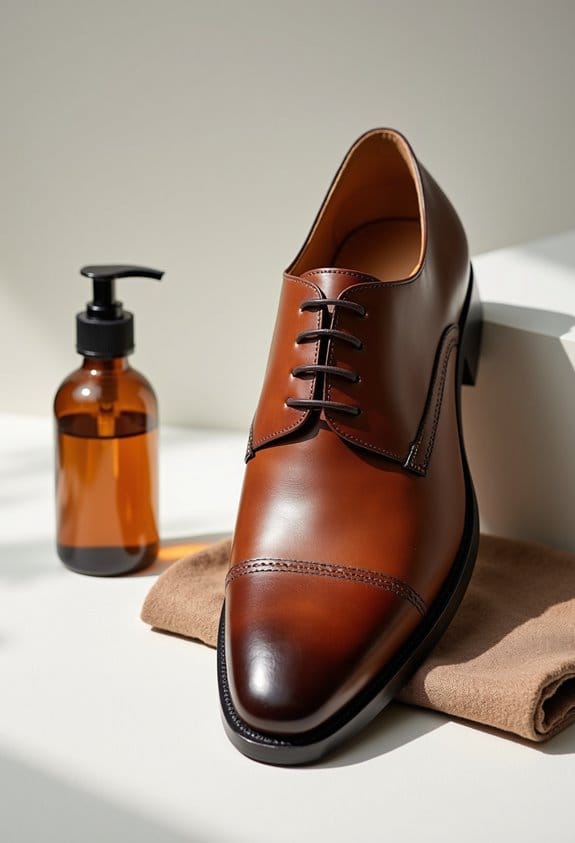
Mink oil and leather conditioner serve different maintenance roles for leather goods. Leather conditioner uses natural oils and waxes to replenish moisture and preserve flexibility, applied every 3 to 6 months with a soft cloth. Mink oil, richer in organic fats and silicone, offers deeper waterproofing but may darken leather and requires sparing use to avoid residue. Choose conditioner for softer leathers and indoor items, mink oil for rugged, outdoor gear. Further details clarify application techniques and effects.
Key Takeaways
- Leather conditioner replenishes natural oils to keep soft leather flexible without significantly darkening color or altering texture.
- Mink oil provides deeper conditioning with waterproofing benefits, ideal for rugged leather exposed to harsh environments.
- Mink oil is thicker and can darken leather, requiring careful, sparing application to avoid greasy residues.
- Leather conditioner suits frequent use on delicate leather, while mink oil is better for outdoor gear needing water resistance.
- Both restore softness and prevent cracking, but conditioners focus on moisture preservation, whereas mink oil adds a protective barrier.
Importance of Proper Leather Care

Why is proper leather care essential for maintaining your items’ quality? Leather care products preserve flexibility, moisture, and lifespan by preventing cracking and drying. You should apply conditioning treatments regularly to replenish natural oils, which keeps leather supple and avoids brittleness. For softer leather, maintenance requires gentle formulations designed to protect delicate fibers without causing damage or stiffness. Deep conditioning and waterproofing are particularly important for rugged leather exposed to environmental stress; mink oil excels in this role, providing both protection and nourishment. Neglecting maintenance greatly shortens leather goods’ durability and diminishes their appearance. Selecting appropriate products depends on leather type and use, ensuring ideal care. Proper routine use of these products extends functionality, preserves aesthetic appeal, and safeguards your investment over time. Additionally, using leather care kits with natural moisturizers like lanolin or mink oil can help restore shine and maintain leather suppleness effectively.
What Is Leather Conditioner?

Leather conditioner functions as a carefully formulated mixture of oils, waxes, and occasionally lanolin, designed to replenish the natural oils lost through wear and environmental exposure. Leather conditioners penetrate the material to moisturize and restore leather’s suppleness, thereby preventing drying and cracking that compromise durability. When applied regularly—about every three to six months depending on use—they maintain softness and flexibility, especially for softer leather types. Unlike other leather treatments, conditioners do not markedly darken leather color, making them suitable for sensitive indoor goods. Additionally, leather conditioners preserve the “pull-up” effect in oil-tanned leather, enhancing its natural aesthetic as it ages. For effective maintenance, apply a thin, even layer using a soft cloth, allowing sufficient absorption time before buffing gently. It is also important to test conditioning frequency to find the best routine for your particular shoes and environment.
What Is Mink Oil?

Although derived from animal fat, mink oil offers unique conditioning and waterproofing benefits for durable leather goods, especially those exposed to harsh environments. Mink oil is extracted from the fatty layer beneath mink fur, providing deep conditioning to restore oils in dried leather. Compared to typical leather conditioner products, it contains a higher viscosity and may not penetrate as deeply, often resulting in surface-level treatment. Mink oil can darken leather substantially upon application, so testing on an inconspicuous area is advisable. It is commonly blended with lanolin and silicone to enhance waterproofing and protective properties. Use mink oil sparingly because excessive amounts can leave a greasy residue, potentially compromising leather’s long-term durability. Understanding these factors will help you determine when mink oil is the appropriate leather care product. Additionally, just as insoles rely on durable, lightweight materials for long-lasting comfort, selecting quality conditioners is crucial for preserving leather’s integrity.
Composition Differences Between Leather Conditioner and Mink Oil

The distinct composition of mink oil compared to conventional leather conditioners greatly influences how each product interacts with leather materials. In Mink Oil vs Leather Conditioner, understanding composition differences is essential. Leather conditioners primarily consist of natural oils, waxes, and lanolin, formulated to moisturize leather and preserve its natural color without significant alteration. Conversely, mink oil is rich in organic fats from the fatty layer beneath mink fur and frequently contains silicone, enhancing waterproofing capabilities. This results in a thicker, more viscous product compared to the thinner consistency of most leather conditioners. As a result, when selecting between Mink Oil vs Leather Conditioner, you must consider these composition differences, as they directly affect leather maintenance, protection, and appearance over time, ensuring you choose the appropriate product for your leather care needs. Both products are designed to restore softness and prevent cracking by nourishing the leather with essential conditioning agents, which is vital for maintaining footwear longevity and appearance. Additionally, understanding the role of conditioning agents helps users make informed choices about their leather care routine.
Absorption Rates and Effects on Leather Color

Two key factors—absorption rate and color impact—should guide your choice between mink oil and leather conditioner for leather care. Leather conditioner has a lower viscosity, which allows it to penetrate deeper into the leather’s fibers, resulting in higher absorption rates that effectively replenish moisture. In contrast, mink oil’s higher viscosity limits its ability to absorb deeply, causing a more superficial treatment. Regarding color effects, leather conditioner can cause a more noticeable darkening on lighter leathers, preserving the natural variation and appearance over time. Mink oil tends to darken leather less dramatically but may create a more uniform color across the surface. Understanding these differences in absorption rates and color impact helps you select the appropriate product for maintaining your leather’s integrity and visual appeal. Regular application is essential to provide long-lasting protection and prevent drying or cracking of leather.
Impact on Oil-Tanned Leathers and the Pull-Up Effect
When caring for oil-tanned leathers, understanding their unique pull-up effect is critical to maintaining their characteristic appearance. This effect causes lighter shades to appear when the leather is stretched or creased, showcasing its tonal variation. To preserve this, apply a leather conditioner regularly, as it replenishes natural oils, preventing stiffness and sustaining color vibrancy. Mink oil, due to its higher viscosity, can inhibit the pull-up effect when used frequently, resulting in a more uniform and darker appearance. Excessive mink oil may also suffocate the leather, hindering its natural aging process. As a result, prioritize leather conditioner over mink oil to maintain flexibility and the dynamic visual contrast characteristic of oil-tanned leathers, ensuring their longevity and aesthetic appeal. Additionally, selecting products with UV-resistant chemicals can help maintain the leather’s color vibrancy over time, especially for items exposed to sunlight.
Water Resistance Capabilities
Offering enhanced water resistance, mink oil contains silicone compounds that form a protective barrier on leather surfaces, markedly reducing water absorption. This barrier greatly improves water resistance, making mink oil suitable for rugged leather items exposed to rain or moisture. In contrast, leather conditioner primarily moisturizes and preserves leather flexibility but provides less effective water resistance, rendering it less ideal for wet environments. You should use mink oil regularly on outdoor leather goods to maintain waterproofing properties; however, avoid overapplication, as excessive silicone can create an artificial seal that inhibits leather breathability and may cause long-term damage. For indoor or lightly used leather, leather conditioner maintains suppleness without compromising moisture levels, but it will not protect against considerable water exposure. Choose the treatment based on your leather’s exposure to moisture and need for water resistance. Additionally, selecting products with breathable, moisture-wicking materials ensures that leather remains comfortable and durable over time.
Application Techniques and Finish Appearance
Effective application techniques vary between mink oil and leather conditioner, necessitating precise execution for best results. When using leather conditioner, apply thin layers with your fingers or a soft cloth, working in circular motions to guarantee ideal absorption. Mink oil, featuring higher viscosity, requires a thicker layer and prolonged resting time—often hours or overnight—to penetrate the leather fully. Both products may darken leather; however, leather conditioner produces a true matte finish, while mink oil creates a low luster surface. After the resting period, buff the leather with a clean brush or cloth to remove any excess and enhance the finish appearance. Understanding these application techniques enables you to maintain leather effectively while achieving the desired aesthetic outcome with either mink oil or leather conditioner. Additionally, maintaining dry conditions during application can prevent damage, similar to how moisture absorption is critical in antifungal treatments.
Pros and Cons of Using Leather Conditioner
Although leather conditioner’s composition of natural oils, waxes, and lanolin makes it safe for diverse leather types, you must apply it consistently to replenish oils and prevent drying or cracking. Leather conditioner’s moisturizing properties help maintain leather flexibility by penetrating deeply, supporting longevity and softness. Regular application—recommended every 3 to 6 months depending on use—ensures effective hydration without over-saturating the material. A key advantage is its ability to prevent drying and cracking without considerably darkening the leather, preserving original color tones. However, its lower viscosity means it may require more frequent applications compared to heavier treatments. Additionally, leather conditioner is less suited for very stiff or heavily worn leather where deeper oil replacement may be necessary. Follow product instructions carefully to achieve ideal results without compromising leather integrity. Many leather shoe cleaning kits available include conditioners that utilize all-natural ingredients designed to preserve leather appearance and extend lifespan.
Pros and Cons of Using Mink Oil
Mink oil serves as a powerful conditioning agent that deeply restores oil-depleted leather while creating a water-resistant barrier suited for outdoor gear. When you apply mink oil, you benefit from its strong waterproofing properties, which effectively repel moisture. However, take caution, as mink oil can darken lighter-colored leather, altering the original appearance. Unlike many leather conditioners, mink oil provides a low luster finish rather than maintaining a matte sheen. The silicone content in mink oil enhances waterproofing but may suffocate leather if overused, restricting its breathability. Over-application can also over-soften the leather, potentially weakening its structural integrity and reducing durability over time. To avoid damage, use mink oil sparingly and test it on a small area before full application. Additionally, maintaining breathability and moisture control is essential in leather care to prevent long-term damage.
Choosing the Right Product Based on Leather Type and Use
Selecting the appropriate product requires understanding the type of leather and its intended use, as each treatment interacts differently with material composition and surface properties. When deciding between Leather Conditioner vs Mink Oil, you should apply leather conditioners to softer leather items to maintain flexibility and prevent drying or cracking. These conditioners preserve the natural “pull-up” effect of oil-tanned leather without darkening it, making them well-suited for luxury or casual wear leather items. Conversely, Mink Oil is ideal for rugged outdoor gear like work boots, providing deep conditioning and superior water resistance. However, frequent use of mink oil may darken leather over time and reduce the “pull-up” characteristic. Assess the specific wear conditions and leather type carefully to choose the treatment that best protects and preserves your leather items.
Maintaining Leather Longevity Through Proper Treatment
To maintain leather longevity, you must consistently apply the appropriate treatment based on the leather’s intended use and environmental exposure. Regular use of leather conditioner replenishes natural oils, preventing drying and cracking that cause premature wear. When maintaining leather items exposed to harsh conditions, mink oil offers deep conditioning and effective waterproofing. However, apply mink oil sparingly to avoid over-softening, which can weaken the leather’s structure. Frequency of application varies: leather conditioner suits frequent treatments for softness and flexibility, while mink oil requires careful, less frequent use. Assess your leather’s specific needs, such as moisture retention or waterproofing, before selecting products. Consistent maintenance with the right balance between leather conditioner and mink oil enhances durability and preserves appearance, ultimately extending the item’s useful life.
Frequently Asked Questions
Is Mink Oil Better Than Leather Conditioner?
Mink oil benefits include deep conditioning and waterproofing, suitable for rugged use. Leather conditioner types vary by softening needs. Proper application techniques dictate effectiveness; neither is universally better, but choice depends on leather type and desired care outcomes.
What Is the Difference Between Leather Oil and Leather Conditioner?
Leather oil provides deeper conditioning with higher oil absorption rates, enhancing waterproofing but may darken leather. Leather conditioner focuses on moisture retention and flexibility. Proper leather maintenance tips include tailored conditioning techniques for specific leather types.
What Are the Cons of Mink Oil?
The cons of mink oil include darkening lighter leather, greasy residue due to high viscosity, potential leather suffocation, dirt attraction, and unsuitability for soft leathers. These drawbacks suggest considering mink oil alternatives for ideal leather care despite its advantages and careful mink oil application.
What’s the Best Thing to Condition Leather With?
The best thing to condition leather is a leather conditioner, like rain nourishing a thirsty plant. Proper leather care relies on conditioning products and maintenance techniques tailored to preserve suppleness and durability without over-darkening or damaging the material.