
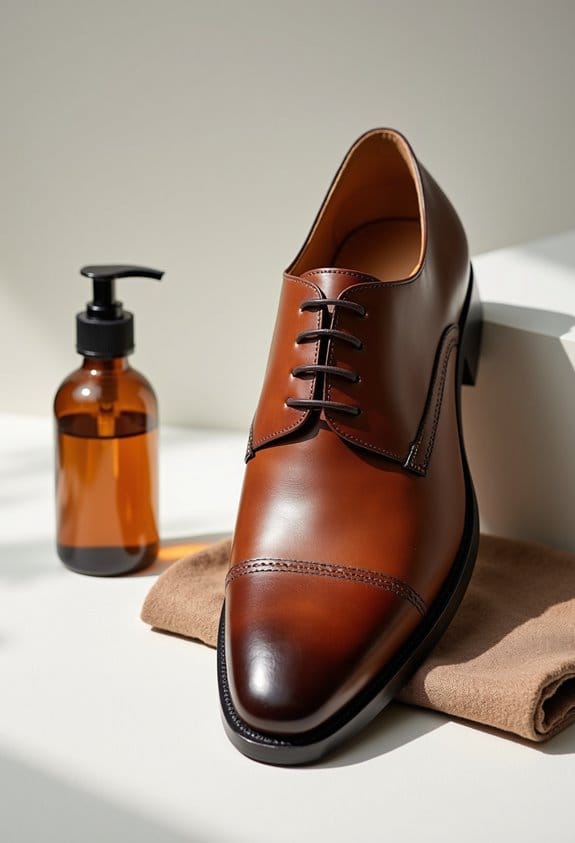

To soften stiff leather shoes without damage, first clean dirt with a soft cloth, then apply a suitable conditioner evenly using circular motions. Use natural oils like jojoba sparingly and allow full absorption overnight. Gentle heat from a hairdryer held 6–8 inches away can relax fibers, but avoid direct exposure. Avoid excessive moisture or harsh chemicals. Flex the leather gradually during treatment to ease stiffness. Following these precise techniques guarantees safe softening. Explore additional expert strategies for thorough care.
Key Takeaways
- Clean shoes thoroughly with a soft cloth and mild soap, then air dry away from direct heat before softening.
- Apply natural oils like coconut or jojoba sparingly on stiff areas and let absorb for several hours or overnight.
- Use gentle low heat from a hairdryer 6-8 inches away while flexing the leather to relax fibers safely.
- Wear shoes indoors for short periods, increasing gradually, while targeting tight spots with heat and conditioner.
- Store softened shoes on a sturdy metal rack in a cool, humidity-controlled environment to maintain shape and quality.
Understanding Different Types of Leather

Leather classification greatly impacts the approach required to soften stiff shoes effectively. Full-grain leather, the top layer of the hide, offers high-quality leather known for durability but initially exhibits stiffness, which reduces with consistent softening leather care and use. In contrast, top-grain leather is sanded to remove imperfections, resulting in increased flexibility and softer texture. Suede leather, derived from the underside of animal skin, is naturally pliable but requires proper care to maintain its softness and prevent stiffness. Nubuck leather closely resembles suede but demands regular conditioning to maintain its texture and flexibility. Patent leather, distinguished by its shiny surface, is more rigid and less flexible than other types, requiring minimal softening leather care. Utilizing natural oils like mink oil can effectively condition and soften various types of leather without causing damage.
Common Reasons Leather Shoes Become Stiff
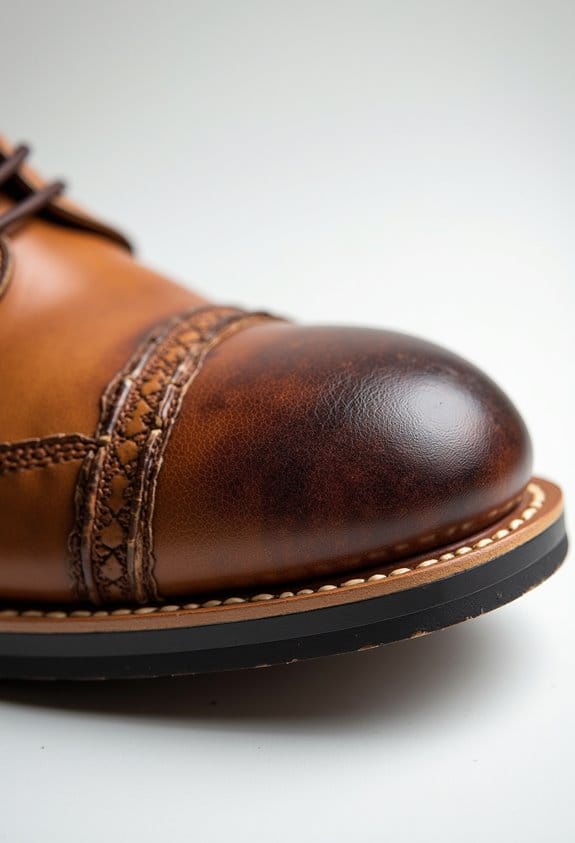
Although the type of leather inherently influences stiffness, external factors such as environmental conditions including humidity levels between 30% to 50%, and temperature extremes below 10°C or above 30°C, also contribute greatly to the loss of natural oils in leather. When leather loses these oils, it becomes dry and stiff, reducing flexibility. Improper storage, such as exposure to direct sunlight or damp environments, accelerates this process by damaging the material or causing uneven dryness. In addition, neglecting regular maintenance—especially cleaning and conditioning—allows dirt to build up and further restricts the leather’s natural movement. Both age and usage impact stiffness; prolonged wear compresses fibers, while infrequent use without conditioning leads to rigidity. Consistent cleaning and thorough conditioning are essential to prevent stiffness and maintain the leather’s suppleness and durability. Using moisture-wicking materials inside your shoes can also help maintain an optimal environment that preserves leather flexibility.
Preparing Leather Shoes for Softening

Proper preparation greatly influences the effectiveness of softening procedures by guaranteeing leather surfaces are clean and free from contaminants. Begin by consulting the manufacturer’s care instructions to understand the best practices for your leather type. Use a clean cloth or soft brush to remove accumulated dirt completely. If deeper cleaning is necessary, apply mild soap mixed with water using a damp cloth, then rinse carefully. Allow the shoes to dry naturally, avoiding overheating sources such as direct sunlight or heaters, which can cause damage. Only apply leather conditioner once the shoes are fully dry to guarantee even absorption. Regular maintenance by cleaning and conditioning will help prevent future stiffness. To prepare the leather properly, thorough cleaning and drying are essential first steps in softening your leather shoes effectively and safely. Choosing a conditioner with moisturizing ingredients like natural oils and lanolin ensures the leather remains supple without darkening.
Using Natural Oils for Softening Leather

Several natural oils, including coconut, jojoba, and avocado oil, can be applied to effectively soften stiff leather shoes by penetrating the leather fibers deeply. Before using natural oils, thoroughly clean the shoes to remove debris and allow better oil absorption. Apply the oil sparingly and evenly with a soft cloth, targeting areas that feel particularly stiff while avoiding over-saturation. Let the leather absorb the oil for several hours or overnight to maximize softening benefits. Natural oils act as conditioners, replenishing the leather’s moisture and helping maintain its flexibility. Regular application is essential to preserve softness and prevent cracking or stiffening over time. By using natural oils consistently, you enhance the durability and comfort of your leather shoes while ensuring their long-term flexibility and appearance. For best outcomes, test compatibility of the oils on a small leather area before full application.
Applying Gentle Heat to Loosen Leather

Applying gentle heat is another effective method to soften leather shoes by relaxing the leather fibers, thereby increasing flexibility. To do this, apply a small amount of heat using a hairdryer set to low, holding it approximately 6 to 8 inches away from the leather surface. This gentle heat helps loosen leather without damage, but you must supervise the temperature closely to avoid overheating and drying out the material. Alternatively, wearing the shoes in a steamy bathroom allows moisture and heat to penetrate naturally. Before or after applying heat, use a leather conditioner to restore oils lost during the softening process, which improves flexibility and prevents cracking. Consistent monitoring guarantees loose leather forms evenly while maintaining the leather’s finish and durability. For ongoing care, it is recommended to regularly use a water repellent spray to protect softened leather shoes from moisture and stains.
Softening With Alcohol and Vaseline
When softening stiff leather shoes, begin by gently rubbing a solution of 70% isopropyl rubbing alcohol onto the leather surface using a clean cloth or cotton ball, ensuring even coverage without saturation. Allow the leather to dry completely before proceeding to the next step. Next, apply a thin, even layer of Vaseline to the same area, working it carefully into the leather to enhance penetration and flexibility. Let the Vaseline absorb overnight to effectively soften the leather shoes and restore their natural suppleness. Avoid using excess Vaseline, as over-saturation can damage the leather’s finish. After the treatment, gently wipe away any excess Vaseline with a soft cloth to maintain the leather’s appearance and prevent an overly greasy surface. This method helps soften leather without compromising integrity. For organizing your shoes after softening them, consider using an innovative bamboo shoe rack to preserve the shoes’ shape while storing.
Moisture Methods to Soften Stiff Leather
Mist the surface of stiff leather shoes lightly with water, ensuring even coverage without soaking the material to avoid fiber damage. Use moisture techniques to gradually soften the leather by allowing it to air dry naturally, away from direct heat, which helps maintain shape and prevents warping. After the leather is dry, apply a minimal amount of leather conditioner with a soft cloth; this restores natural oils lost during the softening process. Combine gentle manipulation of the leather—such as flexing and bending—with moisture methods to ease the break-in period effectively. Consistent application of these steps over time allows the leather to become more pliable without compromising durability, ensuring the shoes soften while preserving their original form and structural integrity. These practices are essential for proper leather care. Additionally, selecting shoe accessories made from durable materials can enhance comfort and prolong the life of your softened leather shoes.
Proper Use of Leather Conditioners
After moisturizing and gently manipulating the leather to soften it, proper conditioning becomes necessary to maintain suppleness and extend durability. For proper maintenance, use a leather conditioner suited for different types of leather, as each demands specific care. Apply a leather conditioner sparingly by rubbing a small amount of leather conditioner onto the surface with a soft cloth, using circular motions to guarantee even coverage without over-saturating. After application, allow the leather to absorb the conditioner fully for several hours or overnight, enabling deep penetration to soften the material effectively. Finally, buff the leather with a clean, dry cloth to remove excess product and restore the natural shine. To preserve leather suppleness and prevent stiffness, condition every 3-6 months following these precise steps. Ingredients like Carnauba wax in conditioners help enhance leather texture and provide water resistance, contributing to longer-lasting softness and protection.
Tips for Breaking in Leather Shoes Safely
Begin breaking in leather shoes by wearing them indoors for progressively longer intervals, starting with increments of 30 minutes to one hour. Gradually wear the shoes using thick socks to create a snug fit, which helps stretch leather fibers safely. Prior to wearing, apply a leather conditioner in circular motions to help the material absorb moisture and increase flexibility. If specific tight areas persist, use a hairdryer on a low heat setting for a few seconds while flexing the leather to soften and stretch the material without damage. For delicate or high-value footwear, consult a professional cobbler who can apply proper care techniques to stretch leather effectively. Following these steps guarantees successful breaking in while maintaining the shoe’s structural integrity and comfort over time. Additionally, storing softened leather shoes on a durable metal shoe rack ensures they maintain shape and are organized safely.
Frequently Asked Questions
How to Soften Hardened Leather Shoes?
Leather conditioning methods combined with moisture application techniques, cautious heat treatment precautions, and natural oils benefits effectively soften hardened leather shoes. Using shoe trees, stretch spray usage, alcohol dampening effects, commercial leather softeners, pillowcase technique, and daily wear tips also help maintain flexibility.
How Do Professionals Soften Leather?
Professionals soften leather using advanced leather conditioning techniques, balancing oil vs cream applications and leveraging heat application methods. They prioritize moisture absorption tips, stretching leather shoes, and employ professional tools while utilizing natural oils and specialized leather softening agents for ideal care.
How to Loosen up Stiff Shoes?
Loosening stiff shoes involves shoe stretching techniques, applying leather conditioner or oil, using warm water and humidity effects, wearing them with thick socks via the sock method, employing heel grips, utilizing shoe trees, and sometimes professional stretching for ideal comfort.
How to Soften Hardened Shoes?
Like a knight soothing his armor, softened shoes require shoe stretching, leather conditioner, moisture treatment, and heat application. Natural oils, fabric softener, baking soda, and shoe inserts aid, while professional services guarantee proper footwear maintenance without damage.


