


To restore yellowed soles on vintage sneakers, begin by cleaning them thoroughly with a mild solution and a soft brush, ensuring complete dryness before treatment. Apply Angelus Sole Bright in a thin layer to the yellowed areas, then wrap the soles in clear plastic to foster controlled UV exposure. After several hours in indirect sunlight, gently scrub with warm water and a toothbrush to remove residues. Repeat as needed until yellowing diminishes. Additional maintenance and protective measures will further preserve your sneakers’ condition.
Key Takeaways
- Clean vintage sneakers thoroughly with a mild solution and soft brush before treatment to remove dirt and grime.
- Apply Angelus Sole Bright lightly on yellowed soles, then wrap in clear plastic and expose to direct sunlight.
- Scrub treated soles gently with a toothbrush and warm water after sun exposure to remove residues.
- Repeat the application and sun exposure process until yellowing diminishes, ensuring soles dry fully between treatments.
- Store restored sneakers in a cool, dry, and dark place to prevent future yellowing and maintain their condition.
Why Vintage Sneakers Develop Yellow Soles
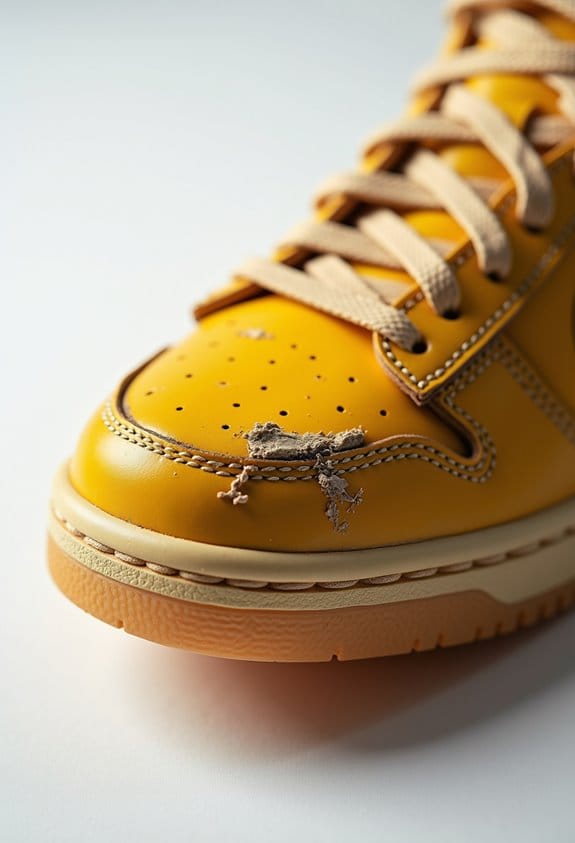
One primary cause of yellow soles on vintage sneakers is oxidation, a chemical reaction where rubber molecules lose electrons when exposed to oxygen, light, and humidity over extended periods. This process causes the material to discolor, resulting in yellowed soles that detract from the shoe’s original appearance. You should understand that rubber compounds in older sneakers break down more quickly, accelerating yellowing compared to modern materials. Additionally, exposure to ultraviolet (UV) rays intensifies oxidation, especially if sneakers are stored in direct sunlight for prolonged durations exceeding several hours daily. Maintaining stable storage conditions, including low humidity below 50% and temperatures around 20°C (68°F), can slow this chemical degradation. Contamination from dirt and grime also contributes to the yellow hue, further affecting visibility of the sole’s original color. Choosing the right material quality in sneaker components helps reduce yellowing and enhances durability over time.
Key Causes Behind Yellowing on Old Sneakers

Numerous environmental and material factors contribute to the yellowing of old sneaker soles, primarily driven by oxidation reactions that occur when rubber components are exposed to oxygen, heat, and ultraviolet light. Yellow soles develop as rubber polymers break down, especially under prolonged UV radiation, which alters light absorption and accelerates discoloration. Heat and humidity further promote oxidation, often worsening yellowing and potentially encouraging mold growth. Additionally, sweat and dirt residues trapped in the sole’s porous structure compound this effect. Different rubber and plastic materials react uniquely to these conditions, impacting the severity of yellowing. To restore vintage sneakers properly, it is essential to understand these causes so you can effectively remove oxidation and prevent further discoloration by controlling environmental exposure during cleaning and storage. Using toxin-free formulas when cleaning helps ensure safety and preserves the integrity of the rubber soles.
Essential Supplies for Sole Restoration

Restoring yellowed sneaker soles requires a specific set of supplies designed to effectively remove oxidation without damaging the material. Begin by acquiring Angelus Sole Bright, a specialized solution formulated to target yellowing on soles. Before applying Sole Bright, you must clean your shoes thoroughly using the Angelus Easy Cleaner Kit to eliminate dirt and grime that could interfere with restoration. A clean, dry rag is necessary for applying Mink Oil evenly, which conditions soles and prevents future yellowing. Additionally, clear wrap or plastic covering is fundamental to secure the shoes after applying Sole Bright, trapping sunlight and enhancing the de-yellowing process. Use a toothbrush and warm water to remove excess solution after treatment. These supplies guarantee precise, controlled restoration outcomes for vintage sneakers. For optimal results, integrating a leather conditioning step with mink oil can help maintain suppleness in leather parts adjacent to the soles.
Proper Cleaning Techniques for Vintage Sneakers

Begin by selecting a soft brush with gentle bristles and prepare a mild cleaning solution, such as the Angelus Easy Cleaner Kit, to carefully remove dirt without compromising fragile vintage materials. Apply the shoe cleaner sparingly, focusing on yellowed areas like soles and toe caps to clean yellow stains effectively. Avoid soaking your sneakers, as excessive moisture can weaken adhesives and cause material degradation. Clean them in a well-ventilated area to accelerate drying and prevent mold buildup. Use gentle, circular motions to lift grime while preserving fabric integrity. After cleaning, allow the shoes to dry completely before proceeding with any restoration treatments. Finally, consider applying a protective spray designed for vintage footwear to prevent future yellowing and maintain the sneakers’ condition over time. Utilizing a microfiber towel afterward helps remove excess moisture without damaging delicate materials.
Step-by-Step Guide to Removing Yellow Stains

A crucial first step involves ensuring the sneakers are thoroughly cleaned and fully dry before applying any restoration products. Begin by using a specialized cleaning solution, such as Angelus Easy Cleaner Kit, to eliminate surface dirt and grime. Apply a light to medium coat of Angelus Sole Bright exclusively on the yellowed sole areas, taking care to avoid non-rubber sections. Next, wrap the treated soles in clear plastic and expose them to direct sunlight for one to six hours; ultraviolet rays activate the product’s de-yellowing properties. After sun exposure, scrub gently with a toothbrush and warm water to remove residue. Repeat this process if yellowing remains. This method allows you to effectively remove yellow stains while preparing the soles to prevent yellowing during subsequent care. For best results, ensure your sneaker laces are refreshed with durable materials that complement the renewed appearance of your shoes.
Applying Protective Treatments After Cleaning
Once the soles are properly cleaned and dried, it is essential to apply a thin, even layer of Angelus Mink Oil to protect the material. Use a clean, dry rag to pat down the oil thoroughly, ensuring full coverage without excess buildup. This protective treatment acts as a water-proofer and conditioner, which helps prevent future yellowing and stains while maintaining the leather’s natural finish and suppleness. Consistently applying protective treatments after each cleaning extends the longevity of vintage sneakers by minimizing exposure to moisture and dirt. When you make a purchase of Angelus Mink Oil, select the recommended amount to cover both the soles and leather adequately. Following these steps offers a practical way to safeguard valuable vintage sneakers, preserving their appearance and structural integrity over time. It’s important to note that mink oil provides an effective waterproof barrier, helping to protect against stains caused by moisture.
Tips for Preventing Future Yellowing on Vintage Sneakers
Although restoring yellowed soles can improve sneaker appearance, preventing future discoloration requires consistent care; store your vintage sneakers in a cool, dry, and dark place to minimize exposure to heat and sunlight, which accelerate oxidation. After each wear, clean the shoes thoroughly with sneaker-specific materials to remove dirt and grime that contribute to yellowed areas. Before wearing, apply a high-quality shoe protector spray to establish a protective barrier against environmental stains. Avoid using sneakers in hot or humid conditions, as moisture increases the risk of yellowing rubber soles. Regularly inspect your sneakers for dirt accumulation and damage, and maintain a cleaning routine accordingly. These steps collectively preserve the soles’ integrity and appearance, preventing premature yellowing and extending the life of your vintage sneaker collection. Additionally, selecting products with natural waxes and oils can help nourish and protect materials, aiding long-term preservation.
When to Consider Professional Restoration Services
When repeated at-home restoration attempts fail to greatly reduce yellowing after three or more cleaning sessions, seeking professional restoration services becomes advisable. You should consider professional restoration when discoloration results from prolonged oxidation that home treatments cannot fully reverse. If your vintage sneakers contain delicate materials or intricate designs, professional techniques provide controlled cleaning that minimizes the risk of damage. Additionally, when yellowing affects collectible models, expert restoration helps maintain structural integrity and preserves market value by accurately matching original aesthetics. Professional restorers use specialized products and processes, such as advanced whitening agents and precise abrasion tools, which outperform typical household cleaners. Ultimately, turning to professional restoration guarantees thorough treatment, especially when yellowing is severe or persistent, and protects your investment by restoring your sneakers closer to their original condition. For effective restoration, it is important to choose products compatible with delicate materials to prevent further damage during cleaning.
Best Practices for Long-Term Sneaker Care
To preserve the appearance and structural integrity of vintage sneakers over time, you must implement consistent cleaning routines after each use to eliminate dirt, sweat, and oils that accelerate yellowing and material breakdown. Clean your sneakers gently with specialized cleaners designed for delicate materials, avoiding harsh chemicals that can erode surfaces. After cleaning, allow them to dry naturally in a cool, shaded area to prevent warping or discoloration. Store sneakers in a dry, well-ventilated space away from direct sunlight and heat sources, as these accelerate oxidation causing yellow soles. Employ high-quality shoe protectors to shield against stains and moisture. Regularly inspect your sneakers for early signs of yellowing or material degradation, and consider professional cleaning services for thorough care, ensuring long-term preservation of both aesthetics and structural condition. Utilizing neutral pH, biodegradable formulas in your cleaning routine helps gently remove stains without damaging delicate sneaker materials.
Frequently Asked Questions
Can You Revive Yellow Sneaker Soles?
Yes, yellow sneaker soles can be revived through various vintage sneaker care methods. Effective sole restoration techniques, such as specialized cleaning products and gentle de-yellowing mixtures, help restore clarity and prolong the lifespan of aged sneaker soles.
Can You Whiten Yellowed Rubber?
Yes, yellowed rubber can be whitened. For example, a collector used Angelus Sole Bright to revive vintage sneakers, demonstrating effective sneaker maintenance and vintage preservation by removing oxidation and restoring original sole color without damaging materials.
How to Get Rid of Yellow Foot Soles?
To get rid of yellow foot soles, sneaker cleaning experts recommend applying a de-yellowing product, exposing soles to UV light, then performing regular sole maintenance with gentle brushing and protective treatments to prevent future discoloration.
What Is the Best Sole Unyellowing Solution?
For those who idolize yellow soles, stop reading. The best sole unyellowing solution involves the hydrogen peroxide method paired with ultraviolet light—sunbathing shoes like a tan enthusiast. Ditch the nostalgia; revive soles wisely and effectively.


