


To clean white shoelaces to look like new, first remove them from shoes and brush off dirt using a soft-bristled brush. Soak laces in warm water with detergent for 30 minutes, then apply a baking soda paste or hydrogen peroxide to stains for effective whitening. Machine wash laces in a mesh bag with heavy-duty detergent at hot settings, rinsing thoroughly before air-drying. Proper identification of material guarantees care, with further cleaning techniques enhancing results.
Key Takeaways
- Remove laces from shoes and brush off dirt using a soft-bristled brush before cleaning.
- Soak laces in warm water mixed with heavy-duty detergent or diluted bleach for five minutes.
- Gently scrub stubborn stains with a baking soda paste or hydrogen peroxide using a soft brush or cotton ball.
- Machine wash white laces in hot water inside a mesh bag with heavy-duty detergent, avoiding colored items.
- Air dry laces completely away from direct heat or sunlight to prevent damage and yellowing.
Understanding Different Types of Shoelaces

Shoelaces are manufactured from various materials, including natural fibers such as cotton and leather, as well as synthetic fibers like nylon and polyester. When cleaning white laces, understanding the different types is critical, as it informs appropriate cleaning methods and affects durability. Flat white laces are often made of cotton, which absorbs stains easily and requires gentle washing techniques. In contrast, white laces constructed from synthetic materials tend to resist stains better and withstand more rigorous cleaning. Cotton leather shoelaces provide a refined look but demand special care due to their sensitivity to moisture and harsh agents. Brightly colored shoelaces can fade if exposed to bleach or strong chemicals. Identifying the lace’s material composition helps you select cleaning methods that preserve both the appearance and durability of your shoelaces. Additionally, considering the material durability of the laces will ensure that your cleaning approach maintains their strength and longevity.
Preparing Shoelaces for Cleaning
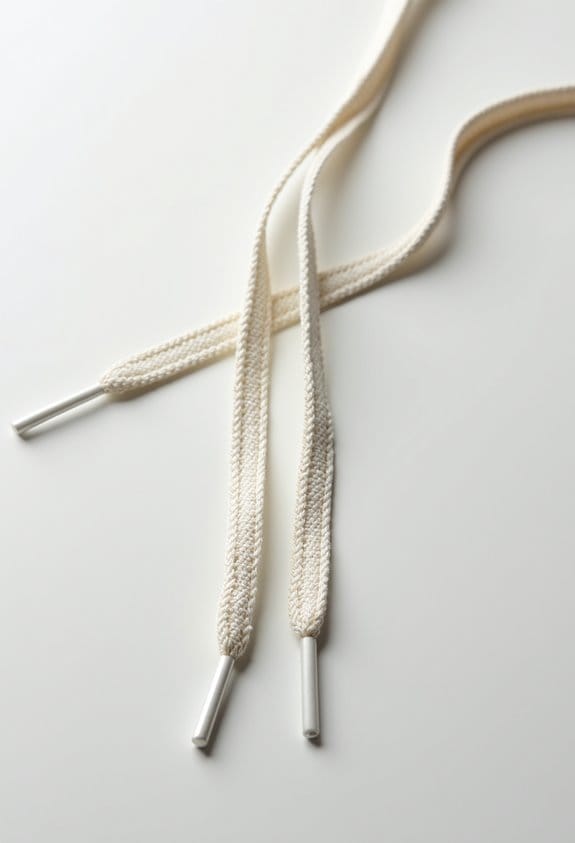
Start by carefully removing the white shoelaces from the shoes to prevent any cleaning agents from damaging the footwear material. After removal, use a soft-bristled brush or a spare toothbrush to gently brush off visible dirt and debris. For shoelaces that are heavily soiled, rinse them under warm water to eliminate initial grime, which facilitates more effective cleaning. Identify the shoelaces’ material type, as this determines the choice of cleaning solution and method. Consider pre-treating the laces by soaking them in a mixture of detergent and warm water, which loosens embedded stains before washing. This preparation guarantees the shoelaces are ready for thorough cleaning without causing material damage or reducing their lifespan. Selecting the appropriate soft horsehair brush can enhance cleaning effectiveness while preserving delicate lace materials.
Effective Stain Removal Techniques
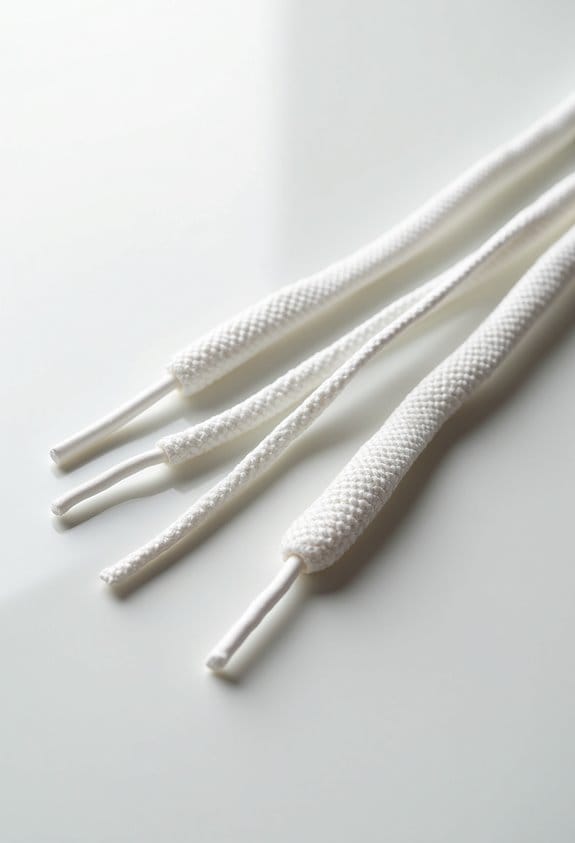
Effectively removing stains from white shoelaces requires targeted pre-treatment using appropriate cleaning agents, such as applying a mixture of heavy-duty liquid laundry detergent diluted with water directly to stubborn spots, allowing it to penetrate for at least ten minutes before washing. For enhanced stain removal, soak the laces in a bleach solution made of ¼ cup bleach per gallon of water for five minutes, then thoroughly rinse to avoid fabric damage. Alternatively, apply a baking soda paste on tough stains and scrub gently with a soft brush to lift dirt. Using hydrogen peroxide on a cotton ball to dab stained areas also helps whiten shoelaces while disinfecting. Consistently rinsing laces after exposure to dirt prevents stains from setting, ensuring more effective cleaning and maintaining the appearance of clean shoelaces. For the best results, consider using a neutral pH cleaning formula as it is safe for your shoelaces and effectively breaks down stains without causing damage.
Using Baking Soda and Vinegar for Brightening
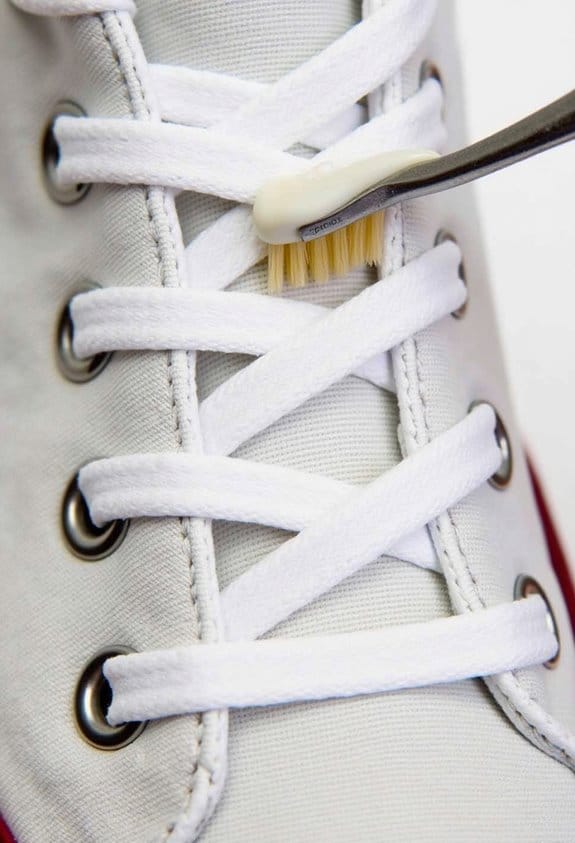
Utilize a baking soda paste made from two tablespoons of baking soda and one tablespoon of water, applying it to white shoelace stains and allowing it to sit for at least 30 minutes before rinsing. For enhanced brightening, soak the shoelaces in a solution of one cup white vinegar mixed with two cups warm water for 30 minutes. This combination lifts dirt and stubborn stains effectively. For tougher marks, apply a mixture of equal parts baking soda and vinegar directly to the shoelaces, scrubbing gently with a toothbrush to clean deeply. Always rinse the shoelaces thoroughly with warm water to remove any residue from the cleaning agents. Finally, air dry the shoelaces in a well-ventilated area. Regular application of this method helps maintain the shoelaces’ bright white appearance and prevents yellowing over time. To ensure the longevity and safety of your shoelaces, consider using eco-friendly shoe washes that are biodegradable and gentle on materials.
Machine Washing White Shoelaces Safely

Before machine washing, thoroughly rinse white shoelaces under cold water to remove excess dirt and debris, which enhances cleaning efficiency. Place the laces inside a mesh laundry bag to prevent tangling and protect them during the cycle. Use a heavy-duty detergent, and wash the laces in hot water alongside similar-colored items to optimize stain removal. For added brightness, consider pre-soaking the laces in a diluted bleach solution following safety guidelines before placing them in the machine. Avoid machine drying, as the heat can melt or deform the plastic aglet tips; instead, hang the laces to air dry completely. These steps guarantee that your white shoelaces are cleaned safely and maintain their original appearance without damage. Proper maintenance and cleaning also help prevent the accumulation of odor and bacteria, essential for foot hygiene.
Hand-Washing Methods for Delicate Laces
When cleaning delicate white shoelaces by hand, prepare a gentle solution using approximately two cups of warm water combined with three to five drops of mild dish soap or laundry detergent. Submerge the laces in the cleaning solution for 15 to 20 minutes, gently agitating to help loosen dirt and remove stains without harming delicate fibers. Use a soft-bristled toothbrush to perform a gentle scrub on any visible spots, which helps eliminate stains while preserving the integrity of the laces. After scrubbing, thoroughly rinse the shoelaces under clean, running water to remove all soap residue, ensuring no suds remain. Finally, hang the white shoelaces to air dry in a shaded area, avoiding direct sunlight that could weaken the fibers and cause fading. Using breathable materials when handling or storing shoelaces can also help reduce moisture buildup and maintain freshness.
Bleaching White Shoelaces: When and How
How can bleaching contribute to restoring the brightness of white shoelaces without causing damage? Bleaching white shoelaces effectively removes tough stains and discoloration, but it should only be used on white laces to prevent unwanted color changes. Begin by soaking the laces in a solution of ¼ cup Clorox bleach mixed with 1 gallon of water for no more than five minutes. Follow this by washing the shoelaces in hot water with ⅓ cup of bleach to enhance the cleaning effect on remaining stains. After bleaching and washing, rinse thoroughly to eliminate all bleach residues, which could otherwise damage the fibers and aglets. Finally, air dry the laces to preserve their shape and integrity, avoiding heat that can shrink or weaken the aglets. For ongoing care, similar to leather maintenance where regular routine preserves appearance, consistent cleaning of shoelaces will help maintain their brightness and durability.
Drying and Maintaining Shoelace Quality
Once the shoelaces have been thoroughly rinsed and cleaned, it is important to air-dry them completely to prevent mildew growth and maintain their structural integrity. Avoid exposing shoelaces to direct sunlight during drying, as ultraviolet rays may cause fading and weaken fibers, compromising shoelace quality. After drying, inspect the laces carefully for any remaining stains; addressing these immediately guarantees ideal cleanliness before re-lacing footwear. Store shoelaces in a dry, shaded environment to avoid moisture accumulation and prolonged exposure to light, both of which degrade appearance and durability. For synthetic shoelaces, consider applying a protective spray designed to repel stains and extend cleanliness. Regularly inspect shoelaces for fraying or damage, replacing them as necessary to maintain both appearance and footwear functionality. Choosing shoelaces made from abrasion-resistant materials can further enhance their longevity and maintain their appearance over time.
Caring for Leather and Synthetic Shoelaces
Although leather and synthetic shoelaces require different cleaning approaches, both materials benefit from careful moisture control and appropriate drying techniques. When cleaning leather laces, use a damp cloth with leather cleaner or a mild Castile soap solution, applying minimal moisture to prevent stiffness or warping. Avoid soaking leather shoelaces entirely. For synthetic shoelaces, such as nylon or polyester, place them in a mesh laundry bag before machine washing with a mild detergent and similar colors to avoid tangling and damage. After cleaning shoelaces, always air-dried them away from direct sunlight or heat sources to preserve their shape and integrity. This combined method guarantees effective care for laces while maintaining their durability and appearance over time. Additionally, choosing shoelaces made from polyester and nylon materials can enhance longevity and resistance to wear during cleaning.
Tips to Keep Shoelaces Looking Fresh Longer
To maintain the appearance of white shoelaces, inspect them regularly for early signs of dirt or stains, addressing any discoloration immediately to prevent deep-set blemishes. Clean your shoelaces using regular laundry with a detergent or an enzyme-based solution, which effectively removes organic stains. Use a soft brush to gently scrub the laces, enhancing stain removal without damaging fibers. After washing, apply a protective spray designed for shoelaces to repel dirt and moisture, assisting you in keeping them looking fresh longer. Store shoes with clean laces in a cool, dry place, minimizing exposure to humidity and light that cause yellowing. Avoid wearing white shoelaces in muddy or excessively dusty environments. Keep a portable cleaning kit with a soft brush and stain remover for prompt maintenance between washes.
Frequently Asked Questions
How Do I Get My Laces White Again?
Like a secret whispered among shoe care enthusiasts, shoelace maintenance thrives on whitening solutions such as baking soda, lemon juice, and fabric cleaners. Cleaning hacks and eco-friendly options deliver stain removal, supporting laundry tips essential for pristine laces.
How to Make the Tongue of a Shoe White Again?
Tongue restoration techniques involve fabric whitening solutions like baking soda paste or diluted bleach for stain removal. Effective shoe maintenance tips include using shoe care products, DIY cleaning hacks, color restoration products, and sneaker customization ideas to preserve clean sneaker tongues.
Does Vinegar Whiten Shoelaces?
Vinegar, a humble elixir, serves as a natural whitener for shoelaces, blending with baking soda in home remedies. Its acidic power aids stain removal across fabric types, though colorfastness concerns and sun exposure require cautious laundry tips.
Does Hydrogen Peroxide Whiten Shoelaces?
Hydrogen peroxide benefits shoelace maintenance by serving as an effective cleaning method for fabric stain removal. As a safe whitening technique, it complements laundry detergent and DIY solutions, offering eco-friendly shoe care essentials alongside alternative whitening agents.


