


You can lace your sneakers creatively using Chevron and Spider Web patterns, which use diagonal threading and geometric designs for a structured fit. Double Helix and Zig Zag styles offer dynamic tension control with angled lace paths, requiring 10-15% longer laces. Lock and Quick Tight methods improve stability by evenly distributing pressure and allowing rapid tension adjustments. Escher and Cascade styles add artistic three-dimensional effects with precise loop placement, while Bi-Color and Woven Color techniques enhance visual contrast using durable, intertwined laces. Additional specifics follow for greater detail.
Key Takeaways
- Chevron lacing creates symmetrical diagonal patterns that add structured style and secure fit to your sneakers.
- Double Helix design offers alternating lace angles for a sleek, friction-minimized look with adjustable tension.
- Lock lacing enhances stability by reducing heel slippage while distributing pressure evenly for improved performance.
- Escher Illusion style produces three-dimensional geometric effects, giving sneakers a dynamic, artistic flair.
- Bi-color lacing uses contrasting hues in criss-cross or bar patterns to make vibrant, eye-catching designs.
Chevron and Spider Web Patterns

Several distinct lacing techniques can markedly alter sneaker appearance, including the Chevron and Spider Web patterns. The Chevron lacing technique involves threading the laces diagonally to form alternating upright and inverted chevrons, providing a structured, symmetrical pattern. You should cross each lace from one eyelet in the row to the next row below, alternating direction for every pair of eyelets. The Spider Web lacing style requires weaving the laces intricately to create a geometric web design, enhancing both texture and visual complexity. This method maintains lace tension evenly, ensuring a secure fit. To achieve a unique flair, vary lace colors or thicknesses when applying these patterns, allowing customization to complement any sneaker design while preserving functional support and durability throughout wear. For added comfort during extended wear, consider incorporating shock absorbing insoles designed to reduce foot fatigue and improve cushioning.
Double Helix and Zig Zag Designs
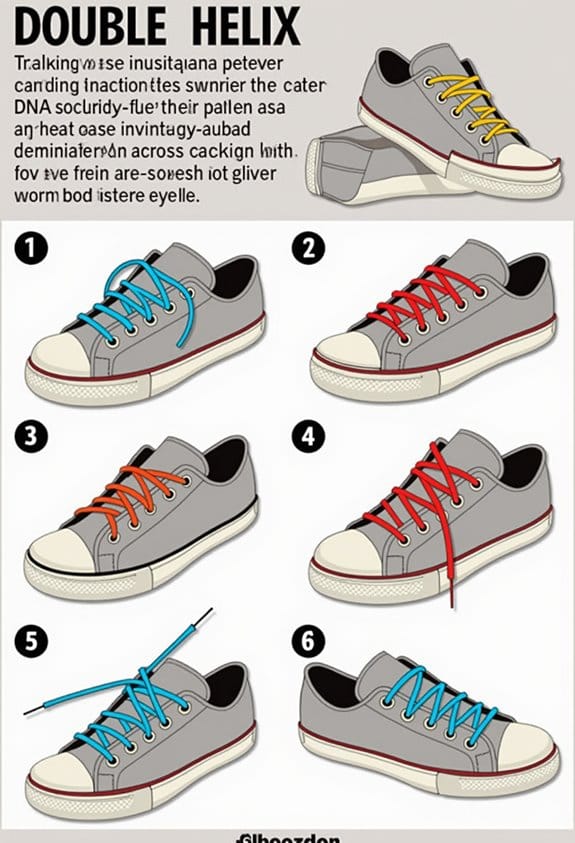
Although both lacing methods offer distinct visual effects, the Double Helix and Zig Zag designs each provide functional benefits that improve sneaker fit and appearance. The Double Helix style, often used in dress shoes, features alternating angles on the lace’s inner and outer paths, minimizing friction and allowing smoother tension adjustments. In contrast, Zig Zag lacing creates a dynamic pattern with alternating diagonal paths that evenly distribute tension across the shoe, enhancing stability for safety boots. Both techniques accommodate varying foot shapes by permitting precise lace tightness control, improving comfort during extended wear. When implementing these designs, select lace lengths 10-15% longer than regular straight lacing to account for the added complexity. Using vibrant lace colors further highlights the patterns, offering a customizable and functional alternative to traditional lacing methods. Choosing flat or oval laces for these styles can enhance stability and minimize slippage during athletic activities.
Lock and Quick Tight Functional Lacing

Building upon the fit and tension advantages of patterns like Double Helix and Zig Zag, the Lock and Quick Tight lacing methods enhance shoe performance through mechanical innovation. The Lock lacing technique creates pulley systems that tighten the fit, greatly reducing heel slippage and improving stability during movement. This system distributes pressure evenly, offering performance benefits such as increased agility and control. Quick Tight lacing divides sections to allow rapid adjustment, making it ideal for activities requiring fast tension changes, like running or biking. Its customization options accommodate various footwear styles and personal fit preferences. Both functional lacing techniques minimize discomfort by preventing lace bite while maximizing comfort. Applying these precise lacing techniques guarantees a secure, adaptive fit tailored to athletic and everyday use, delivering both comfort and enhanced performance benefits. Additionally, enhancing grip and safety on slippery surfaces can be achieved by complementing proper lacing techniques with anti-slip rubber heel taps.
Escher and Cascade Artistic Styles

The Escher and Cascade lacing styles employ intricate patterns that prioritize visual appeal while maintaining shoe stability. The Escher Illusion mimics fish swimming in various directions, achieved by interlacing laces in a complex, intertwined sequence that creates a dynamic, three-dimensional effect. This pattern requires precise placement of each lace segment to maintain balance and prevent slippage. In contrast, the Cascade Flow features diagonal loops that descend smoothly, producing a sense of motion and fluidity along the shoe’s profile. Both styles serve functional purposes by evenly distributing tension and securing the foot. Implementing these lacing methods allows you to elevate sneaker aesthetics through structured Artistic Expression, making your footwear visually distinctive yet reliable for daily use or athletic activities. Mastery of these techniques enhances both design and utility in sneaker customization. Additionally, pairing these lacing styles with customizable insoles can further improve comfort and foot support while maintaining the shoe’s unique appearance.
Bi-Color and Woven Color Techniques

Expanding from intricate artistic styles like Escher and Cascade, bi-color and woven color techniques enhance sneaker lacing by introducing contrasting hues and textured patterns. You can use bi-color lacing by selecting two different colored laces to create dramatic color combinations, applying criss-cross or straight bar patterns to emphasize contrast. For woven color techniques, interlace different colored laces through spider web or chevron designs, producing unique textures and depth. This pattern experimentation not only elevates the visual appeal but also supports sneaker personalization by matching lace colors to specific outfits or moods. Adjust tension carefully to maintain lace function and highlight patterns effectively. Layering laces of varied thickness and shade enhances the woven effect while keeping practical usability intact, transforming basic sneaker lacing into a distinct style statement. Opting for durable materials like nylon or polyester laces also ensures that these creative styles maintain their look and performance over time.
Frequently Asked Questions
What Are the Most Stylish Ways to Lace Sneakers?
The most stylish sneaker lacing techniques include Criss Cross for classic appeal, Straight European for minimalism, Zig Zag for trendiness, Chevron for decorative flair, and Double Helix offering comfort combined with unique visual lacing styles and creative lace patterns.
What Are Magic Laces?
Magic laces are the chameleons of footwear, offering easy lace techniques and creative lace patterns. Their magic lace benefits include secure fit, quick adjustment, and enhanced comfort, transforming ordinary sneakers into hassle-free, stylish companions.
How to Do the Shoe Lace Trick?
To do the shoe lace trick, one must learn how to lace using loops and knots. Exploring alternative patterns and creative techniques enhances both security and appearance, allowing customization while maintaining a functional, stylish grip on any sneaker.
How to Tie Shoe Laces in a Cute Way?
Who wouldn’t want to elevate their footwear game with playful shoelace designs? Fashion lace techniques like Zig Zag or Double Helix offer unconventional lacing styles that tie shoe laces in a cute, eye-catching way perfect for any occasion.


