


Silver-infused socks use antimicrobial fibers combined with moisture-wicking materials to inhibit odor-causing bacteria by disrupting cell membranes and limiting sweat accumulation. Typically containing 50 to 200 parts per million of silver nanoparticles, they reduce bacterial growth and control foot odor during prolonged wear. These socks also support skin hygiene by preventing fungal infections and maintaining dryness. However, environmental impacts from silver release warrant consideration. Understanding these factors can inform your choice of effective odor control solutions.
Key Takeaways
- Silver ions disrupt bacterial membranes and inhibit growth, effectively reducing odor-causing bacteria on socks.
- Silver-infused fibers combined with moisture-wicking materials cut surface moisture by 30-50%, limiting conditions for odor development.
- These socks provide dual antimicrobial and moisture management action, enhancing foot hygiene and preventing odor and infections.
- Athletes and individuals prone to foot odor or fungal infections benefit most from silver-infused socks.
- However, environmental concerns and potential bacterial resistance suggest cautious and balanced use of silver textiles.
How Silver Ions Combat Odor-Causing Bacteria

Several mechanisms enable silver ions to combat odor-causing bacteria effectively. Silver ions might make bacterial cell membranes unstable, resulting in disrupted cellular function and death. They also interfere with DNA replication, preventing bacteria from multiplying. Additionally, these ions inhibit protein synthesis, which is essential for bacterial survival and growth. The antimicrobial effects target bacteria and fungi, the primary agents responsible for foot odor and infections such as athlete’s foot. Silver ions maintain a moist environment that discourages microbial growth, thereby reducing odor formation during extended wear. Research verifies silver’s capacity to kill odor-causing microorganisms, enhancing both cleanliness and comfort. When using silver-infused socks, these mechanisms work collectively to improve foot hygiene by reducing bacterial populations, not merely masking unpleasant smells but addressing their root causes directly. In addition, combining silver’s antimicrobial action with moisture absorption technologies, as seen in effective foot powders, can further enhance odor control and foot health.
The Dual Benefits of Moisture-Wicking and Antimicrobial Fibers

Understanding how silver ions inhibit bacterial growth is only one aspect of maintaining foot hygiene. Silver-infused socks combine antimicrobial fibers with moisture-wicking materials that draw sweat away from skin, typically reducing surface moisture by 30-50%. This moisture management limits the warm, damp environment where bacteria and fungi thrive. By reducing sweat accumulation, the socks create unfavorable conditions for microbial growth, directly supporting odor prevention. The silver ions simultaneously disrupt bacterial cell functions, providing a dual-action defense against foot odor and infections. These features benefit athletes and individuals prone to excessive sweating, ensuring comfort and freshness during prolonged wear. Incorporating both moisture-wicking and antimicrobial fibers into sock design results in enhanced foot hygiene, reducing microbial proliferation while managing moisture effectively throughout daily or vigorous activities. Additionally, using breathable, moisture-wicking materials helps reduce sweat and blister risk, further improving foot comfort and hygiene.
Environmental and Health Considerations of Silver-Infused Textiles
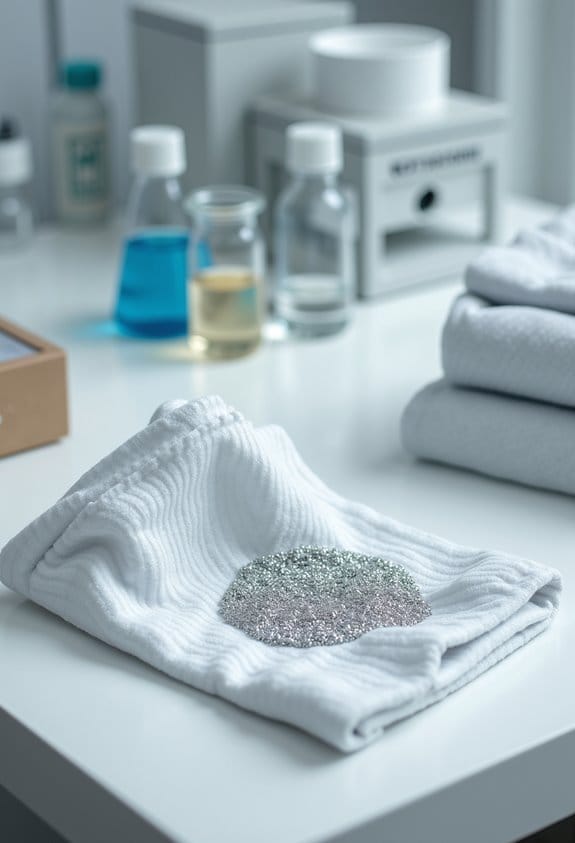
Although silver-infused textiles offer notable antimicrobial benefits, you must carefully consider their environmental and health implications. Silver particles released into water systems during washing have raised concerns, prompting environmental impact assessments in countries like Denmark and Sweden. While studies indicate no immediate human health hazards, elevated silver levels in agricultural sludge may harm soil organisms. Additionally, bacterial resistance concerns highlight risks associated with widespread silver use, necessitating cautious management. Given silver’s finite availability, projected to deplete within 30 years, implementing silver recycling methods is essential to reduce environmental strain. Monitoring silver concentrations in treated water remains critical for ongoing risk evaluation. You should weigh these factors when selecting silver-infused textiles, balancing antimicrobial advantages against potential ecological and health challenges. Many odor control products, such as those utilizing natural ingredients, offer safer alternatives to heavy metal-based textiles.
Scientific Insights on Silver Use in Footwear and Healthcare

Silver particles are commonly incorporated into footwear materials at concentrations ranging from 50 to 200 parts per million, effectively targeting and eliminating odor-causing bacteria through their known antibacterial properties. These silver nanoparticles disrupt bacterial cell membranes, reducing microbial growth and controlling odor. In healthcare, silver’s antibacterial effects are utilized in wound dressings and medical devices to prevent infections. However, when laundering silver-infused textiles, some silver nanoparticles may be released, raising concerns about environmental impact and effectiveness after repeated washing. Research shows that while silver levels in treated water remain below harmful thresholds, ongoing monitoring is necessary to understand long-term effects. Additionally, you should be aware of the potential for bacteria to develop resistance to silver, which requires continual study to maintain silver’s continued efficacy in both footwear and healthcare applications. Incorporating breathable, eco-friendly materials alongside silver particles can further enhance comfort and reduce sweat accumulation in footwear.
Who Should Consider Wearing Silver-Infused Socks?
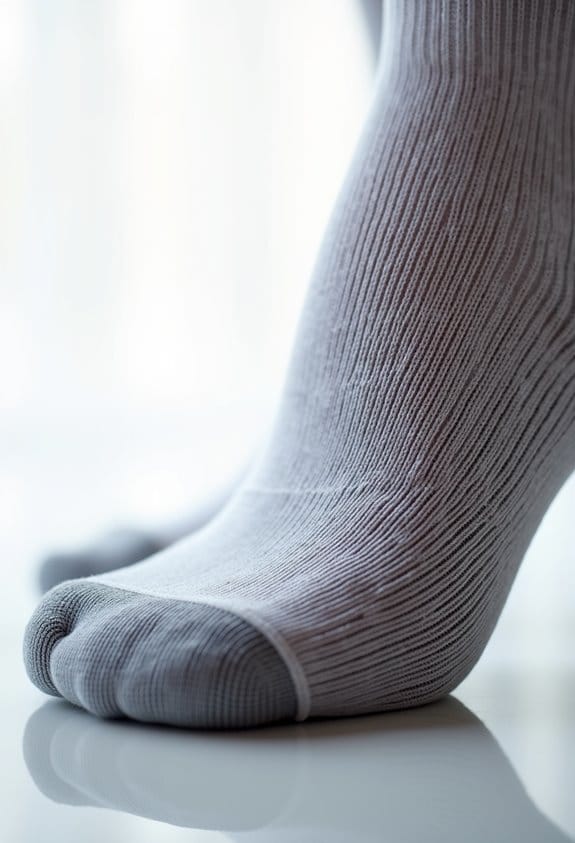
Who benefits most from wearing silver-infused socks depends on factors such as foot moisture levels, activity intensity, and skin sensitivity. Athletes performance can improve with these socks due to their antimicrobial properties, which reduce bacterial growth during vigorous exercise. Casual wearers experiencing persistent foot odor or fungal infections also gain from this protection, maintaining hygiene in everyday environments. Individuals with sensitive skin should consider silver-infused socks because they minimize irritation by controlling microbial proliferation without harsh chemicals. These socks are engineered with fine silver fibers that disrupt bacterial cell function, effectively reducing odor-causing agents. By targeting microbial colonization, they offer a hygienic solution suitable for intensive physical activity, travel, or prolonged daily wear, ensuring consistent foot health for diverse users. Additionally, pairing these socks with breathable materials can enhance moisture control and comfort for optimal foot care.
Frequently Asked Questions
Do Silver Socks Really Work?
Silver socks effectively work by leveraging silver benefits, particularly its antimicrobial properties, which inhibit bacteria and fungi growth. This action supports odor prevention, making silver-infused socks a practical choice for maintaining foot hygiene and reducing unpleasant smells.
Why Does Silver Stop Unpleasant Smells in Socks?
Like killing two birds with one stone, silver properties disrupt odor bacteria by breaking cell structures and halting replication. Advanced fabric technology incorporates these ions, preventing bacterial growth and effectively neutralizing unpleasant smells in socks during wear.
What Kind of Socks Are Best for Preventing Foot Odor?
The best socks for preventing foot odor combine breathable materials and moisture-wicking fabrics with antimicrobial properties. This blend effectively reduces sweat, inhibits bacterial growth, and maintains foot hygiene, ensuring long-lasting freshness and odor control during wear.
Does Silver Absorb Odors?
Like a vigilant guard neutralizing threats rather than absorbing chaos, silver properties do not absorb odors but exert antimicrobial effects. This odor control stems from disrupting bacteria, effectively reducing foot odor through inhibition, not absorption.


