

Managing plantar fasciitis pain requires heel support that cushions the heel and stabilizes the arch to reduce strain on the plantar fascia. Use heel cups or gel pads for shock absorption at the ligament’s attachment to the heel bone. Orthotic inserts provide alignment and redistribute pressure, improving weight distribution and reducing inflammation. Proper footwear with stiff heels and supportive midsoles complements heel supports by absorbing impact forces during walking or standing. Further guidance explains therapeutic options and prevention strategies.
Key Takeaways
- Use shoes with adequate arch support and cushioned, stiff heels to reduce plantar fascia strain and absorb impact forces effectively.
- Select heel cups, gel pads, or orthotic inserts to cushion the heel and improve weight distribution during walking or standing.
- Consider custom or over-the-counter orthotics for enhanced arch stability and alignment to prevent further plantar fascia stress.
- Combine heel support with stretching exercises and physical therapy for faster pain relief and prevention of chronic plantar fasciitis.
- Replace worn-out shoes regularly and avoid unsupportive footwear to maintain proper foot biomechanics and reduce heel pain.
Understanding Plantar Fasciitis and Its Impact

Although plantar fasciitis primarily results from inflammation of the plantar fascia ligament, it is essential for you to recognize how this thick band of connective tissue supports the arch and connects the heel bone to the front of your foot. This ligament, approximately 15 centimeters in length, plays a vital role in maintaining proper arch support during standing and walking. When plantar fasciitis develops, the resulting heel pain often originates at the ligament’s attachment point to the calcaneus bone. The inflammation caused by repetitive strain or excessive impact impairs the ligament’s function, reducing arch stability. Understanding the mechanical relationship between arch support and the plantar fascia helps clarify why heel pain emerges, particularly during initial movements after rest. Proper management targets reducing ligament inflammation to restore normal foot mechanics and alleviate discomfort. Additionally, selecting footwear with durable, supportive materials can help prevent further strain on the plantar fascia by providing adequate protection and stability.
Key Symptoms to Recognize

A primary indicator of plantar fasciitis is a sharp, localized pain at the bottom of the heel, especially during the first steps after waking or following extended inactivity periods. You may also experience stiffness in the arch of your foot, which often intensifies if the condition is left untreated throughout the day. Heel pain tends to worsen after physical activities like running or prolonged standing, limiting your mobility. While symptoms typically improve with rest, they often reoccur with increased movement or when wearing unsupportive shoes. Recognizing these key symptoms early is vital for preventing chronic complications. Identifying consistent pain patterns and discomfort helps determine the need for targeted interventions, including proper heel support to manage plantar fasciitis effectively. Early symptom recognition is essential to maintain foot function and reduce pain. Using orthotic insoles with strong 3D arch support can significantly alleviate plantar fasciitis pain by redistributing pressure and providing stability.
How Proper Footwear Influences Plantar Fasciitis

Ponder selecting footwear that provides adequate arch support and cushioning to considerably reduce plantar fasciitis pain by evenly distributing pressure across the foot. Proper footwear helps decrease strain on the plantar fascia by absorbing impact forces during walking or running. Shoes with stiff heels and supportive midsoles are essential for shock absorption, limiting stress on the foot’s soft tissues. Individuals with high arches should choose shoes offering enhanced arch support, while those with flat feet might require stability or motion control features to improve alignment. It is also vital to replace worn-out shoes promptly, as diminished support can worsen plantar fasciitis symptoms. Footwear that permits natural foot movement and ample toe space further reduces irritation, aiding recovery and preventing additional foot complications associated with improper support or constrained foot mechanics. Additionally, shock-absorbing materials in footwear play a crucial role in reducing foot strain during daily activities and athletic performance.
Types of Heel Support for Pain Relief
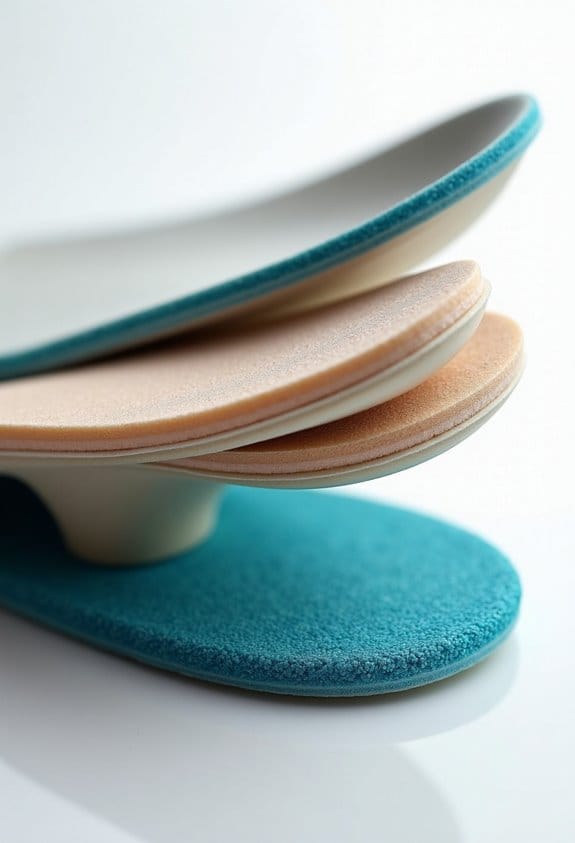
Effective heel support considerably reduces plantar fasciitis pain by minimizing direct pressure on the heel and stabilizing foot mechanics. Heel cups and pads provide cushioning directly beneath the heel, absorbing impact and reducing strain. Gel insoles offer shock absorption, beneficial for high-impact activities, while arch supports improve foot alignment by maintaining a neutral position, thereby distributing weight evenly across the plantar fascia. Night splints, although not heel supports per se, assist by gently stretching the plantar fascia overnight to reduce morning stiffness. For optimal results, select heel supports that fit well within your footwear and target specific pressure points. Using arch support in combination with heel cushioning guarantees balanced weight distribution, which is essential for effective pain relief and functional stability during walking and standing. Additionally, firm medial arch support plays a critical role in improving posture and reducing foot fatigue, enhancing overall comfort.
The Role of Orthotics in Managing Symptoms

Three primary benefits distinguish orthotics as a recommended intervention for plantar fasciitis: arch support, improved foot alignment, and pressure redistribution across the plantar fascia. Orthotics, whether custom-made or over-the-counter, stabilize the foot’s arch structure, which helps reduce strain on the plantar fascia. They also promote proper foot alignment, decreasing abnormal stresses that contribute to heel pain. Additionally, orthotics evenly distribute body weight across the foot, minimizing localized pressure that exacerbates inflammation. You should consult a healthcare professional to select orthotics tailored to your foot mechanics and activity level. Properly fitted orthotics have been shown in studies to markedly reduce heel pain and improve foot function compared to standard footwear alone. Using these devices can enhance comfort and support throughout daily activities, improving overall symptom management for plantar fasciitis. Moreover, insoles featuring high arch support and shock absorption are particularly effective at alleviating the strain placed on the plantar fascia during walking and standing.
Effective Home Remedies and Self-Care Strategies
Several home remedies and self-care strategies can effectively alleviate plantar fasciitis symptoms when applied consistently. You should apply ice to the affected foot area for 20-minute intervals to reduce inflammation and pain. Regular stretching of the calf muscles and plantar fascia improves flexibility and decreases discomfort. Wearing shoes equipped with proper arch support and cushioning is essential to minimize stress on the plantar fascia during daily activities. Additionally, maintaining a healthy weight lessens the load on the plantar fascia, contributing to pain management. Employ self-massage techniques on the calf and foot arch to relieve muscle tension and enhance blood circulation. Using Dr. Scholls Plantar Fasciitis Pain Relief Insoles can provide targeted cushioning and shock absorption to further alleviate heel pain. Combined, these approaches provide significant relief and support for managing plantar fasciitis pain without specialized treatment.
When to Consider Professional Physical Therapy
If symptoms persist despite applying self-care strategies like rest, ice, and stretching over several weeks, professional physical therapy may be necessary to address plantar fasciitis pain. A physical therapist will perform a personalized assessment to identify movement dysfunctions contributing to your discomfort. They design tailored exercise programs that promote healing and provide better support to the plantar fascia and surrounding muscles. Specialized treatments, such as Instrument Assisted Soft Tissue Mobilization and nerve gliding exercises, are used to alleviate pain and restore function. Early intervention with physical therapy often leads to faster recovery and decreases the likelihood of chronic pain. Additionally, a physical therapist offers guidance on appropriate footwear and activity modifications, helping you maintain better support and prevent future episodes of plantar fasciitis. Using therapeutic insoles as recommended by a physical therapist can significantly enhance foot support and reduce pain during daily activities.
Medication Options for Inflammation and Pain
Medication plays a critical role in managing inflammation and pain associated with plantar fasciitis, especially when conservative treatments alone do not provide sufficient relief. Your medication options include over-the-counter nonsteroidal anti-inflammatory drugs (NSAIDs) such as ibuprofen or naproxen sodium, which help reduce pain and inflammation effectively. For more persistent cases, corticosteroid injections may offer temporary relief, but repeated use should be avoided due to potential risks like tissue damage. Additionally, platelet-rich plasma (PRP) injections can promote tissue healing and further reduce pain in chronic conditions. It is crucial to combine these medication options with stretching exercises and orthotic support to maximize treatment efficacy. Using ergonomic insoles with precise arch support can also significantly alleviate pain and improve foot function. Always consult a healthcare professional before starting any medication regimen to verify it suits your specific health conditions and needs.
Lifestyle Adjustments to Prevent Recurrence
Effective management of plantar fasciitis requires integrating lifestyle modifications to reduce the risk of symptom recurrence. You should avoid shoes without adequate arch support, as they increase strain on the plantar fascia and may exacerbate pain. Regularly replace worn-out shoes to help reduce improper foot alignment during everyday activities. It is important to stretch the plantar fascia and calf muscles daily, using controlled stretches held for 30 seconds, repeated three times per session. Incorporate low-impact exercises like swimming or cycling to maintain cardiovascular fitness while minimizing foot pressure. Maintaining a healthy weight is essential because excess body mass increases stress on the plantar fascia, promoting inflammation. Applying ice therapy after activity can further reduce pain and inflammation. These adjustments collectively support tissue healing, reduce mechanical stress, and help prevent future flare-ups of plantar fasciitis symptoms. Additionally, choosing shoes with wide shoe laces can improve fit and stability, enhancing overall foot support during movement.
Preparing for a Medical Appointment and What to Expect
When preparing for a medical appointment concerning plantar fasciitis, you should compile a detailed record of your symptoms, including their onset, intensity, and factors that worsen the pain. Document the duration of your foot discomfort and any specific activities or positions that increase pain levels. Include relevant personal and family medical history, especially previous foot problems or systemic conditions that may influence diagnosis. List all current medications and supplements taken, as these affect treatment decisions. Prepare questions regarding treatment options and pain management strategies to facilitate clear communication with your healthcare provider. Expect the clinician to inquire about your daily activities, lifestyle habits, and pain variation throughout the day. This organized approach guarantees a thorough evaluation and informed, effective management of plantar fasciitis pain. Additionally, using natural waxes for conditioning footwear can provide supportive protection and enhance comfort during daily activities.
Frequently Asked Questions
Can Plantar Fasciitis Heel Support Be Worn With All Types of Shoes?
Plantar fasciitis heel support varies in shoe compatibility depending on heel support types. Some fit well with athletic or casual shoes, but fashion considerations may limit use with formal or narrow footwear, requiring careful selection for comfort and style.
How Often Should Heel Supports Be Replaced for Optimal Effectiveness?
Heel supports typically require replacement every 6 to 12 months depending on usage. Effectiveness duration varies, but visible wear, reduced cushioning, or discomfort signal signs replacement needed to maintain ideal support and pain relief.
Are There Specific Materials Best Suited for Plantar Fasciitis Heel Cushions?
Despite concerns about durability, memory foam, gel inserts, and orthopedic materials are best suited for plantar fasciitis heel cushions. They offer effective shock absorption, cushioning, and support, essential for reducing foot pain and improving comfort during activity.
Can Heel Supports Help Prevent Plantar Fasciitis in Athletes?
Heel supports can serve as preventive measures by providing cushioning and arch support, potentially enhancing athletic performance. However, common misconceptions exist, as heel supports alone do not guarantee prevention without proper training, stretching, and footwear adjustments.
Is It Safe to Use Heel Supports During High-Impact Exercises?
Like a sturdy bridge weathering pounding waves, heel supports can be safe during high-impact activities if paired with exercise modifications and safety considerations, ensuring the foot remains protected while enduring the relentless forces of vigorous movement.


