


Storing shoes under the bed efficiently uses limited floor space but demands organized, breathable containers to prevent dust accumulation and moisture. Maintain hygiene by regularly cleaning, disinfecting footwear, and avoiding damp shoes to reduce odors and bacterial growth. Verify proper ventilation to protect shoe integrity and enable quick retrieval. Without these precautions, shoe storage can cause clutter, reduced air quality, and damage. Additional considerations on maintenance and alternative solutions follow for optimized shoe care and space management.
Key Takeaways
- Under-bed shoe storage optimizes limited space and keeps the bedroom clutter-free when organized properly.
- Poor ventilation and dust accumulation under the bed can damage shoes and create hygiene issues.
- Using breathable containers and regularly cleaning shoes prevents odors, mold, and pest attraction.
- Difficult access and low visibility under the bed risk disorganization and forgotten shoes.
- Alternative storage options like closet racks or entryway organizers reduce stress and improve room aesthetics.
Benefits of Storing Shoes Under the Bed

Although bedroom floor space is often limited, storing shoes under the bed offers a practical solution to optimize available room efficiently. This storage method saves valuable floor area, especially in smaller bedrooms, while increasing overall shoe capacity without adding bulk. You can maintain a neat environment since shoes remain hidden from sight, contributing to a clutter-free appearance. Using designated storage organizers designed for under-bed access improves convenience, allowing quick retrieval without disturbing other items. Additionally, proper storage systems shield shoes from dust accumulation and prevent obstruction in high-traffic zones. For individuals with limited closet space, under-bed shoe storage provides considerable benefits, transforming unused space into an effective, protected storage zone that balances functionality with room aesthetics. Moreover, incorporating compact designs like the Kitsure 3-tier shoe rack enhances efficient use of tight spaces.
Hygiene Considerations for Under-Bed Shoe Storage

How does storing shoes under the bed affect hygiene? This practice raises several hygiene considerations due to dust and debris accumulation, which creates an environment conducive to allergens and bacteria proliferation. Shoes often carry outdoor dirt and germs that transfer to bedding or other personal items when stored in this confined, dark space. Additionally, odors develop and pests may be attracted, further undermining cleanliness. For effective shoe storage, regular cleaning and disinfection of footwear is essential, especially when using less visible areas like beneath the bed. To maintain a healthy living environment, prioritize accessible storage locations that allow for proper ventilation and ease of cleaning. This approach minimizes contamination risks associated with allergens and bacteria while improving overall indoor air quality. Choosing shoe organizers with breathable mesh or dustproof covers can also help reduce odor and maintain hygiene.
Common Issues With Shoe Storage Beneath the Bed

Where should shoes be stored for convenience and hygiene? One must recognize several common issues associated with storing shoes beneath the bed. Shoes placed in this location often accumulate dust and debris due to the unclean atmosphere found in dark, confined spaces. This increases the risk of damage and diminishes shoe quality over time. Additionally, accessing shoes under the bed can be cumbersome, leading to disorganization and making daily routines inefficient. This storage method frequently results in a cluttered living space, which contradicts the goal of maintaining a tidy bedroom environment. Due to poor visibility and restricted airflow, shoes might be forgotten or neglected, further exacerbating wear and hygiene problems. Understanding these pitfalls is essential when considering this storage option. Moreover, ensuring your basketball shoes have durable laces can help maintain their performance even if storage conditions are less than ideal.
Best Practices for Keeping Shoes Clean and Organized

A well-structured shoe storage system relies on regular cleaning and the use of breathable containers to maintain hygiene and extend footwear durability. Choose a storage spot that allows airflow to prevent moisture buildup, such as fabric bins or mesh organizers. Avoid items you should never store, including damp shoes or those caked with mud, as they promote mold and odor. Organizing shoes by type, frequency of use, or season in clearly labeled sections simplifies maintenance and retrieval. Disinfecting shoes regularly, especially after outdoor use, reduces allergens and potential pathogens, improving indoor air quality. Keep frequently worn shoes in accessible areas like entryway racks for routine cleaning. Rotate seasonal footwear to designated closets or boxes to avoid clutter and maintain cleanliness. Following these practices guarantees efficient, hygienic shoe storage that protects your footwear investment. Additionally, using no-tie elastic shoelaces can aid in quick shoe removal and ease of handling during the cleaning and organizing process.
Alternative Shoe Storage Solutions for Small Spaces
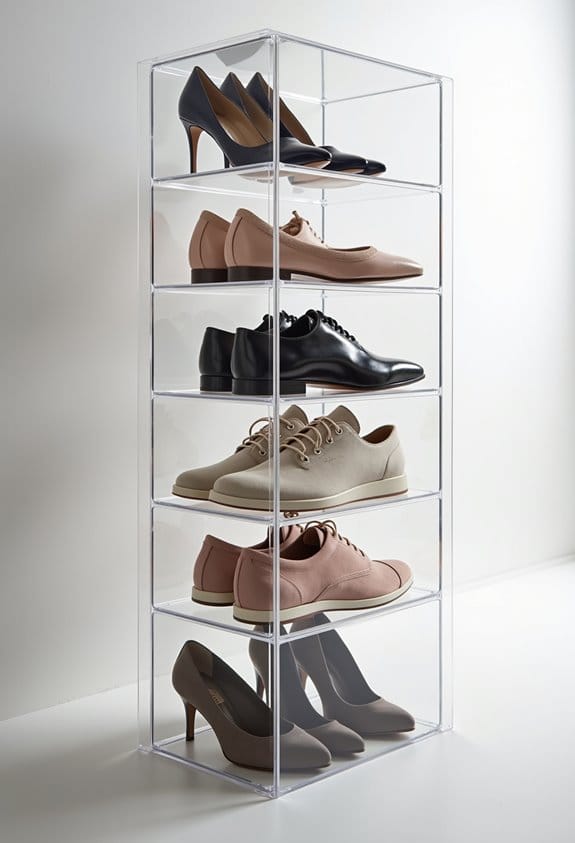
Maximizing limited space in small living areas requires strategic shoe storage solutions that prioritize accessibility and organization. Utilize closet space effectively by installing adjustable shelves or racks that increase shoe organization while reducing clutter and improving visibility. Entryway shoe racks provide convenient, functional storage, letting you access frequently worn pairs without creating mess. Vertical shoe organizers that hang on door backs make use of otherwise wasted vertical space, offering a compact method to store multiple shoes in small apartments. Clear, stackable bins allow categorization by type or frequency of use, preventing dust accumulation and facilitating quick identification. Additionally, repurposing furniture such as benches with built-in compartments combines seating and storage, optimizing limited floor area. Moreover, selecting over-the-door organizers made of breathable materials helps reduce moisture and odor buildup, maintaining shoe freshness in confined spaces.
Impact of Lifestyle Changes on Shoe Maintenance
Since the COVID-19 pandemic heightened awareness of cleanliness, you must adopt rigorous disinfection routines for shoes to reduce germ transmission. These lifestyle changes emphasize hygiene, making you reconsider traditional shoe storage practices. Avoid placing footwear directly under the bed, as this area can harbor dust and bacteria, compromising cleanliness. Instead, select storage locations that minimize contamination risks while maintaining accessibility. Effective shoe storage should include breathable containers or organizers, which prevent moisture buildup and reduce microbial growth. By incorporating consistent cleaning protocols, such as using disinfectant sprays or UV sterilizers, you maintain shoe hygiene effectively. The shift in lifestyle demands that you prioritize environments that support healthful maintenance, ensuring shoes remain clean, organized, and safely stored away from sleeping zones to align with contemporary hygiene standards. Additionally, using microfiber towels during shoe cleaning helps remove excess moisture, contributing to better hygiene and prolonging shoe life.
How to Protect Leather Shoes When Stored Under the Bed
When storing leather shoes under the bed, it is crucial to control environmental factors like humidity, ventilation, and cleanliness to prevent material degradation. You should never store leather items directly on the floor, as dust and bacteria accumulate, increasing the risk of mold growth and leather cracking. To protect leather shoes, place them in breathable cotton shoe bags or containers designed for leather goods to maintain shape and reduce moisture exposure. Ascertain the storage area remains dry, ideally below 60% relative humidity, and ventilated to discourage mold development. Before storing, clean and condition the shoes thoroughly to preserve their flexibility and appearance. These precautions help minimize damage while using under-bed space, but you should consider alternative storage in clean, well-ventilated locations whenever possible. Additionally, using cedar shoe trees inside your shoes can help absorb moisture and maintain their shape during storage.
Psychological Effects of Shoe Clutter in the Bedroom
Cognitive load increases when shoes are stored in cluttered or difficult-to-access spaces under the bed, leading to mental clutter that affects decision-making. Shoe clutter creates visual clutter, which can induce stress and anxiety by overwhelming your mental processing capacity. This accumulation of unorganized footwear under the bed also fosters the “black hole effect,” where items are forgotten, intensifying mental clutter. Additionally, impaired access requires bending or reaching, causing physical discomfort and forming negative associations with daily routines. The presence of dust and allergens from under-bed shoe storage further disrupts sleep quality by contributing to an unclean environment. Consequently, shoe clutter in bedrooms can reduce overall well-being, hinder personal confidence, and diminish restful sleep. Maintaining an orderly and accessible shoe arrangement minimizes these psychological effects effectively. Integrating customized inserts like 3D printed insoles into your footwear can improve physical comfort and posture, potentially reducing some negative effects associated with disorganized shoe storage.
Choosing the Right Under-Bed Shoe Storage Products
Reducing shoe clutter improves mental clarity and physical comfort, making effective under-bed storage a practical solution. When choosing under-bed shoe storage, prioritize products with dust-proof features to protect footwear from dust accumulation. Opt for organizers with transparent windows, such as the Onlyeasy Sturdy Under Bed Shoe Storage Organizer, so you can easily view and access shoes without opening multiple containers. Guarantee the design is sturdy, featuring durable zippers and reinforced handles to support daily use and prolong longevity. Consider foldable storage options that allow you to maximize storage efficiency by saving space when not in use. Most organizers accommodate 12 to 24 pairs of shoes, providing practical capacity while fitting under standard beds, helping you maintain an organized and clutter-free bedroom environment. Additionally, selecting storage with breathable materials like Oxford cloth or bamboo can help prevent moisture buildup and keep shoes fresh.
Frequently Asked Questions
Should You Store Shoes Under Your Bed?
Storing shoes under the bed can optimize space utilization and seasonal storage, but dust accumulation may impair hygiene. Using dust-proof bins enhances easy access while protecting shoes from dirt and moisture, balancing convenience with cleanliness effectively.
Should We Keep Shoes Under the Bed?
Storing shoes under the bed is generally discouraged due to dust accumulation and odor risk. Effective shoe maintenance tips favor accessible storage solutions and bedroom organization hacks that prioritize dust prevention methods, preserving cleanliness and shoe longevity.
Why Shouldn’t You Store Things Under Your Bed?
Over 60% of people report dust accumulation under beds, causing health risks. Storing items there leads to accessibility issues, inefficient space utilization, and pest attraction, making it an impractical and potentially harmful storage solution in most households.
Where Is the Best Place to Store Shoes in the House?
The best place to store shoes is using closet organization and shoe rack ideas, which guarantee accessibility and neatness. Seasonal storage in vacuum-sealed bags or clear bins offers space-saving solutions, protecting footwear while maximizing closet efficiency.


