

To remove salt stains from leather boots in winter, prepare a solution using equal parts distilled white vinegar and water. Dampen a soft cloth with the mixture and gently blot the stained areas to dissolve the salt. Use a soft-bristled toothbrush for stubborn spots. Wipe away excess moisture with a clean towel, air dry fully, then apply a leather conditioner to restore suppleness. Proper care prevents damage and extends boot life. Additional methods guarantee thorough winter protection and maintenance.
Key Takeaways
- Mix equal parts distilled white vinegar and water to gently dab and dissolve salt stains on leather boots.
- Use a soft cloth or toothbrush to apply the vinegar solution, focusing on salt-affected areas without scrubbing harshly.
- Wipe boots with a clean towel, air dry completely, then apply leather conditioner to restore moisture and prevent cracks.
- Regularly brush and clean boots after salt exposure and use waterproofing sprays to protect leather from future damage.
- Consider professional cleaning for persistent stains or expensive boots to ensure safe, thorough removal and preserve boot lifespan.
Why Salt Stains Are Harmful to Leather Boots

Salt stains pose several significant risks to leather boots that demand immediate attention. Salt is corrosive and can damage leather by drying out the material, leading to cracks and weakened fibers. If salt remains on leather boots, it forms a white, powdery residue that not only mars their appearance but also traps moisture. This trapped moisture increases the risk of mold and mildew development, which compromises the structural integrity of the boots. Failure to remove winter salt stains promptly shortens the lifespan of leather boots, reducing their durability. To prevent irreversible damage, you must remove salt stains as soon as possible after exposure. Timely cleaning preserves both the aesthetic and protective qualities of leather, ensuring excellent performance during winter conditions. Using a dedicated leather cleaner before conditioning can effectively treat stains without harming the leather.
Tools and Materials Needed for Cleaning Salt Stains

Before beginning the cleaning process, assemble necessary tools and materials to guarantee efficiency and thoroughness. You will need a soft cloth to gently wipe the boots and a solution made of equal parts distilled white vinegar and water for treating salt stains. A suede brush is essential when working with suede leather, allowing you to lift salt residues without damaging the texture. Have a leather conditioner ready to restore moisture after cleaning, preventing dryness and cracking. Additionally, use a shoe brush to remove loose dirt and salt particles prior to applying any liquids. For hard-to-reach areas, a soft-bristled toothbrush helps remove salt from seams and edges. Optional heavy-duty wipes, designed for tough stains, can streamline the cleaning while ensuring the leather remains undamaged. To further protect your boots and extend their lifespan, consider applying heel plates for added durability.
Step-By-Step Method to Remove Salt Stains With Vinegar
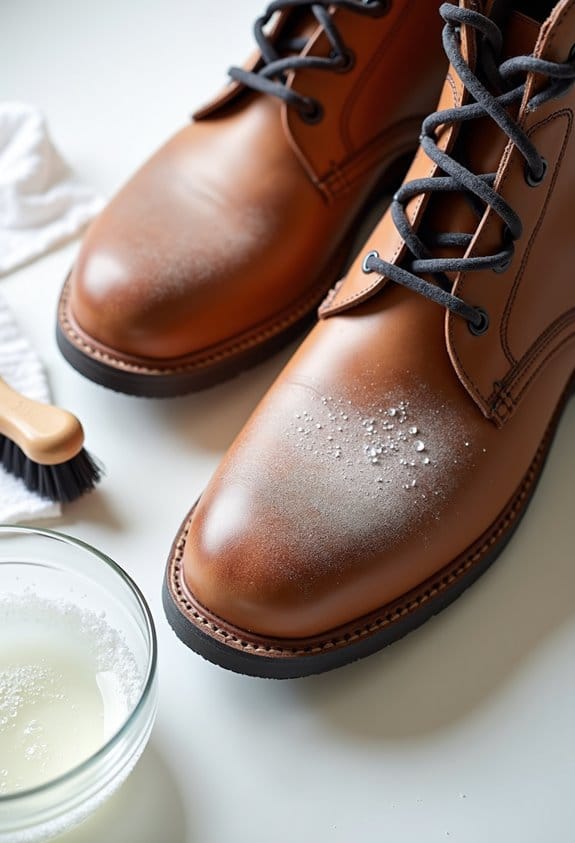
To effectively remove salt stains from leather boots, prepare a solution of equal parts distilled white vinegar and water, measuring approximately half a cup of each. Dip a soft cloth into this vinegar solution and gently dab the salt-stained areas, taking care not to rub harshly to prevent leather damage. For stubborn salt stains in hard-to-reach places, use an old toothbrush dipped in the cleaning solution to carefully scrub the residues. After treatment, wipe the boots with a clean towel to remove excess moisture, and then allow the leather boots to air dry completely away from direct heat. Once dry, apply an appropriate leather conditioner to restore moisture and shield the leather from future harm. This method effectively cleans salt stains while preserving leather integrity. Regular cleaning and conditioning are important steps in maintaining leather suppleness and preventing brittleness over time.
Using Tub O’ Towels for Easy Salt Stain Removal
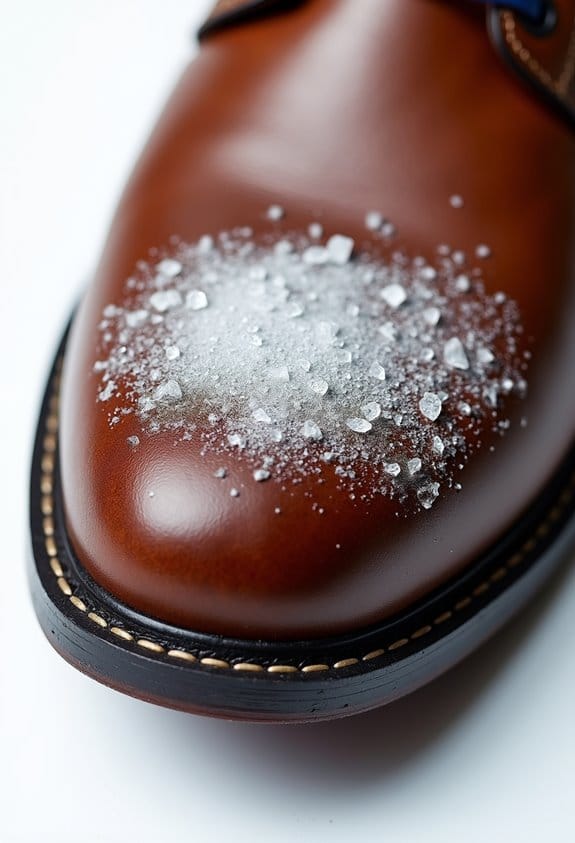
Utilize Tub O’ Towels heavy duty wipes, which employ Bond Buster™ Technology to break the salt residue bond effectively without damaging leather fibers. These oversized, textured wipes are engineered to remove salt stains from leather boots efficiently, preventing the wipes from breaking down during use. Before cleaning, test a wipe on a hidden leather area to guarantee compatibility. Gently rub the salt-stained sections of your boots using the wipe, applying moderate pressure until the salt dissolves and lifts away. The chemical formulation targets and disintegrates salt buildup without compromising the leather’s surface integrity. These wipes offer a convenient alternative to traditional cleaning methods, allowing you to maintain your boots’ appearance with minimal effort. Once the salt is removed, proceed with conditioning to preserve the leather, guaranteeing the boots remain supple and protected. For enhanced longevity, consider integrating toe protectors to shield your boots from scuffs and wear during regular use.
How to Properly Dry and Condition Leather Boots After Cleaning
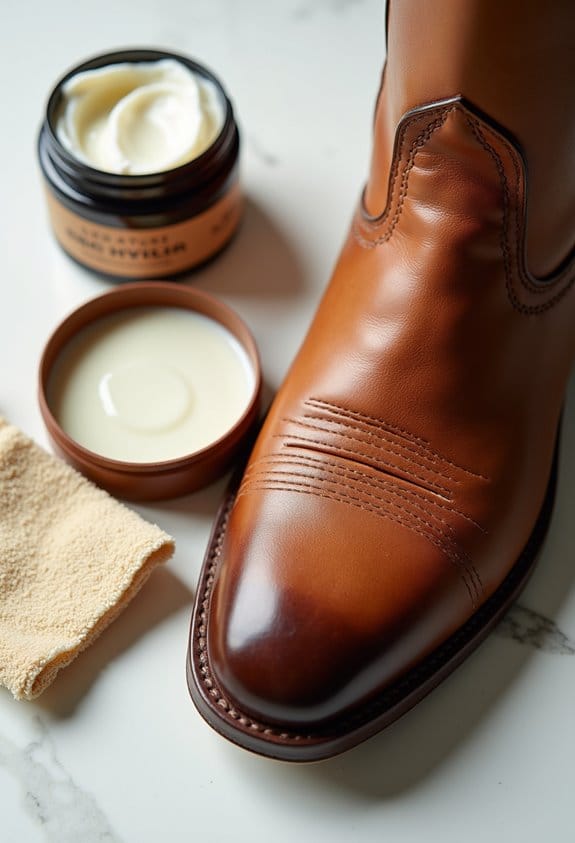
Once the leather boots have been thoroughly cleaned, allow them to air-dry naturally at room temperature, keeping them away from direct heat sources such as radiators or sunlight, which can cause cracking or distortion. Position the boots with a boot tree or a rolled-up towel to maintain their shape during drying. After the boots have completely dried, apply a quality leather conditioner evenly across the surface to restore moisture and flexibility. For best results, warm the leather gently with a hairdryer on a low setting between thin coats to aid absorption. Make certain the boots are fully clean and free of residue before conditioning to avoid damaging the leather. Multiple thin layers of conditioner should be applied, allowing each to penetrate fully before adding the next, preserving the leather’s suppleness and durability. Using a waterproof material storage bag can help protect leather boots from moisture and dirt during travel or storage.
Preventing Future Salt Damage to Leather Footwear
Although cleaning salt stains removes visible damage, preventing future salt exposure is crucial for maintaining the leather’s integrity and appearance. You should regularly brush your leather boots with a shoe brush after exposure to salted surfaces to remove loose salt and dirt. Applying a protective leather conditioner forms a barrier that reduces moisture penetration and salt damage, thereby extending the life of your boots. For enhanced protection, use waterproofing sprays specifically formulated for leather; these repel water and salt, preventing stain formation. After use, inspect your boots for any residual salt to verify timely cleaning. Proper storage in a cool, dry place away from direct sunlight and heat sources also helps prevent deterioration caused by moisture and salt accumulation. Following these steps is key in preventing future salt damage to leather footwear. Additionally, selecting sprays with water-based, eco-friendly formulas ensures safe and effective protection without harming the leather.
Best Practices for Maintaining Leather Boots in Winter
When maintaining leather boots during winter, consistent cleaning and conditioning are essential to preserve their durability and appearance. Begin by regularly brushing off loose salt and dirt immediately after exposure to prevent stains from setting. Use a cleaning solution made of equal parts water and white vinegar to remove salt residues effectively. After cleaning, apply a high-quality leather conditioner to restore moisture and avoid drying or cracking caused by salt exposure. For additional protection, consider using a water-repellent spray designed specifically for leather, creating a barrier against moisture and stains. Store leather boots in a cool, dry place away from direct heat and sunlight to maintain their shape and structural integrity. Following these maintenance steps consistently guarantees your leather boots remain resilient and visually appealing throughout winter months. Regular application of leather care products also promotes long-lasting shine and protection against the elements.
When to Seek Professional Cleaning Services
If salt stains remain visible on leather boots despite thorough cleaning and conditioning, professional cleaning services should be considered to prevent further damage. Persistent stains from leather boots often require specialized treatments unavailable through home methods. When dealing with delicate fabrics or mixed-material footwear, professional cleaning guarantees safe handling and avoids irreversible damage. Experts provide tailored solutions by carefully evaluating the boot’s composition, choosing appropriate eco-friendly solvents, and applying advanced stain removal techniques. If your boots hold significant value or are from designer brands, professional care helps maintain their aesthetic and structural integrity. Opting for professional cleaning extends the lifespan of winter footwear, especially when conventional cleaning has failed. Seeking such services offers a reliable method for thorough restoration while protecting delicate fabrics and leather surfaces effectively. Additionally, professionals often use advanced shoe restoration kits that combine cleaning, conditioning, and repair for optimal results.
Frequently Asked Questions
How to Get Rid of Salt Stains on Winter Boots?
The best cleaning methods involve brushing off salt, using a vinegar-water solution, and wiping clean. Salt stain prevention includes regular boot care tips, applying leather protection spray, and conditioning to maintain moisture and avoid damage.
How to Remove Salt Marks From Leather?
To remove salt marks from leather, one might imagine a troubadour scrubbing with white vinegar and water. Effective leather care demands brushing salt off first, followed by careful winter maintenance, stain prevention, and boot protection using conditioners.
Does Vinegar Remove Salt Stains?
Vinegar effectiveness in removing salt stains is notable due to its acidity, but best cleaning solutions often include alternative methods like specialized products. Protective measures, such as testing and conditioning, minimize leather damage during treatment.
Will Salt Water Ruin Leather Boots?
Salt water is like a relentless winter wind eroding a fragile fortress; it can ruin leather boots by drying and cracking them. Proper leather protection, winter boot care, knowledge of salt alternatives, and understanding boot materials preserve durability.


