


To organize shoes by season and save space, first separate footwear into spring/summer and fall/winter categories, cleaning and drying each pair thoroughly before storing. Use clear, stackable plastic boxes labeled with season and shoe type to facilitate quick identification. Implement a rotation system that places current-season shoes within easy reach and stores off-season pairs in a designated, cool, dry area. Incorporate vertical storage solutions to maximize closet space efficiently. Following these steps guarantees effective seasonal shoe management and preservation, with additional techniques available for optimizing storage further.
Key Takeaways
- Categorize shoes into seasonal groups like winter, spring, summer, and fall to streamline organization and usage.
- Use clear, stackable plastic boxes labeled by season and shoe type for efficient space-saving and easy identification.
- Implement a seasonal rotation system, storing off-season shoes in a designated area and swapping them at season changes.
- Clean and dry shoes thoroughly before storage, using breathable bags or inserts to maintain shape and prevent damage.
- Store off-season footwear in waterproof, labeled bags or boxes in cool, dry places to protect and preserve condition.
Assess Your Footwear Collection

To begin organizing your footwear by season, first categorize all shoes into four distinct groups: winter, spring, summer, and fall. Next, evaluate the number of pairs in each category, focusing on those used most frequently to prioritize retention. Assess the condition of each shoe, setting aside those with significant wear or damage for donation or repair. Create a visual inventory by photographing each pair to simplify selection and streamline shoe storage. When working within a small space, limit each seasonal collection to essential footwear, balancing quantity with spatial constraints to maximize efficiency. Prioritize pairs suited for specific activities and weather conditions, ensuring stored shoes remain functional and accessible while maintaining order in a compact area dedicated to seasonal rotation. Incorporating adjustable shoe trees can help maintain shoe shape and longevity during storage.
Categorize Shoes by Season

After evaluating your footwear collection, arrange each pair into seasonal groups: winter, spring, summer, and fall. This categorization optimizes your closet space by ensuring only relevant shoes are immediately accessible, preventing unnecessary clutter. Separate shoes into designated seasonal zones within your storage area to reduce wear and tear caused by overcrowding. Employ storage ideas such as using clear or labeled containers for out-of-season shoes, allowing quick identification during seasonal changes. Maintain a rotation schedule to store shoes not currently in use, preserving their condition. This method also promotes mindful management of your shoe inventory, aligning your collection with lifestyle requirements. Adopting these categorization strategies creates a functional, efficient storage system that saves space and facilitates easy access to season-appropriate footwear. Using magnetic shoe boxes can further enhance organization by providing stackable, ventilated, and clear storage solutions that protect and display your shoes effectively.
Choose Suitable Storage Containers

Within the shoe organization process, selecting suitable storage containers plays a critical role in preserving footwear quality and optimizing space. To store shoes effectively, use clear plastic shoe boxes that allow you to identify pairs easily without opening them. Choose containers that are stackable to maximize vertical closet space, preferably with secure lids to shield shoes from dust and environmental damage during long-term storage. For delicate footwear, opt for breathable fabric or mesh storage bags, which prevent moisture buildup and help maintain the shoe’s shape. Label each container clearly by season and shoe type—such as winter boots or summer sandals—to facilitate quick retrieval. By following these guidelines, you maintain shoe integrity while making efficient use of your available storage area. Additionally, selecting storage boxes with ventilation holes helps reduce moisture and odors, keeping your shoes fresh over time.
Implement a Seasonal Rotation System

Effective organization requires implementing a seasonal rotation system by separating your shoes into current season and off-season categories, which facilitates access to frequently worn pairs. Begin by sorting your collection into these two groups, then label storage containers clearly for each season to streamline swapping footwear every six months. Designate a specific storage area, such as a closet shelf or bins, to keep off-season shoes organized and store away those not in use. Regularly assess your shoes during seasonal changes, removing damaged or unworn pairs to maintain an efficient rotation system. Rotating shoes at the start of spring, summer, fall, and winter helps you focus on the appropriate footwear while optimizing space. This method prevents clutter and guarantees your most relevant shoes remain readily accessible. Consider using stackable shoe racks to maximize vertical closet space and increase storage capacity for both seasonal and off-season shoes.
Store Off-Season Shoes Efficiently
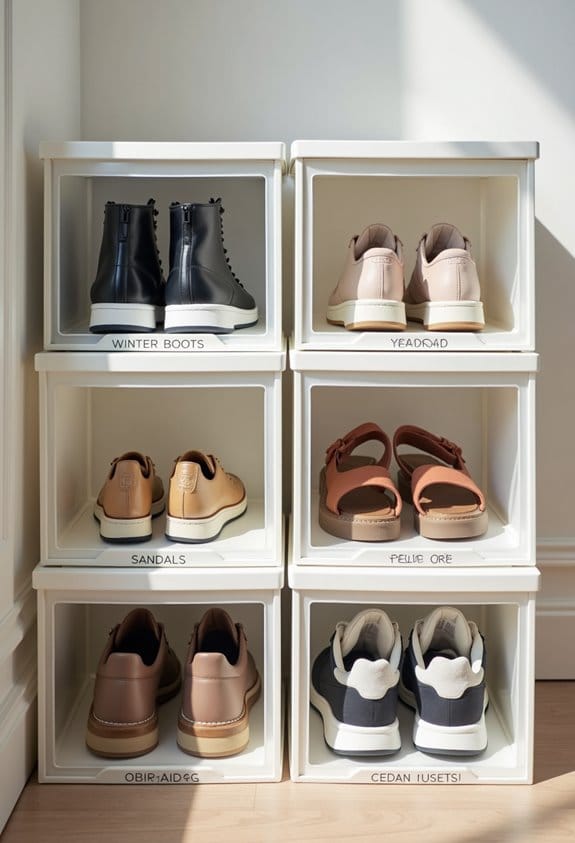
A variety of storage containers are essential for efficiently organizing off-season shoes, with sturdy, labeled boxes providing clear identification while protecting footwear from dust and damage. To store off-season shoes effectively in small spaces, select boxes made from rigid plastic or high-density cardboard, measuring approximately 12 by 7 by 5 inches to accommodate most shoe types without excess bulk. Group shoes by category—such as winter boots or summer sandals—and store them in a cool, dry environment to avoid moisture-related damage and material degradation. Use breathable fabric bags for delicate pairs to maintain shape and prevent dust accumulation. This systematic approach will enable you to utilize space efficiently while ensuring quick access to appropriate footwear each season without clutter or confusion. Consider storage solutions that utilize stackable designs to maximize vertical space and reduce floor clutter.
Maintain Shoe Condition Before Storage
Thoroughly clean each shoe before storing to eliminate dirt, grime, and moisture that can accelerate material degradation. Ascertain shoes are completely dry, particularly if worn in wet conditions, to prevent mold and mildew growth while stored away. Use breathable storage options such as fabric bags or ventilated boxes to maintain adequate airflow and avoid moisture buildup. For leather shoes, insert shoe trees to preserve shape, reduce creasing, and maintain structural integrity during extended storage periods. Regularly inspect your stored shoes for any signs of wear, such as cracks, fading, or odor, addressing these issues promptly. Consistently following these practices will help maintain shoe condition effectively, prolonging their lifespan and affirming they remain in prime shape when retrieved from storage. Additionally, using natural moisturizers like lanolin or mink oil before storage can help maintain the suppleness and shine of leather shoes.
Maximize Space With Vertical Storage
When limited floor space restricts storage options, vertical shoe storage provides a practical solution by utilizing wall height and door areas efficiently. Implement floor-to-ceiling shelving to increase shoe capacity, taking advantage of unused vertical space in closets or hallways. Installing wall-mounted shelves allows you to display frequently worn seasonal shoes, improving accessibility and minimizing floor clutter. Additionally, hanging organizers on closet doors serve as a compact vertical storage solution, keeping pairs visible and easy to retrieve. Custom vertical shoe racks can accommodate various shoe heights, supporting tall boots alongside shorter footwear while maintaining neat organization. By adopting these vertical storage methods, you can rotate seasonal shoes quickly without disrupting your entire collection, thereby maximizing space while keeping your shoes orderly and accessible throughout the year. Many vertical racks, such as the VTRIN 10 Tier Rack, offer large storage capacity to maximize organization options in compact areas.
Label Storage for Easy Identification
Effective labeling is fundamental to maintaining organized seasonal shoe storage, especially when employing vertical storage methods that hold multiple boxes or containers. Clearly label storage boxes with large-font descriptions specifying shoe types and colors for quick identification. Incorporate photographs of the shoes on labels to visually represent contents, reducing the need to open multiple boxes. Use a consistent system, such as color-coding or numbering, to organize shoes by season, which streamlines storage and retrieval. Guarantee labels are printed on durable, weather-resistant materials to prevent fading or damage over time. Mark boxes distinctly for “Spring/Summer” or “Fall/Winter” to reinforce seasonal organization. This methodical labeling approach helps you efficiently organize shoes, saving time and preserving accessibility within compact storage spaces. Additionally, selecting storage solutions with stackable designs enhances space-saving while keeping your labeled boxes stable and accessible.
Swap Shoes as the Season Changes
A designated swap of footwear twice annually—typically at the start of spring and fall—facilitates systematic seasonal organization while minimizing closet clutter. To swap shoes as the season changes, evaluate each pair’s condition and clean or dry them before storage, which prolongs lifespan and maintains appearance. Use sturdy, labeled shoe boxes to protect off-season footwear from dust and damage, ensuring identification remains efficient. Position current season shoes prominently at the closet’s front, while storing off-season pairs towards the back to optimize accessibility. This rotation saves space by preventing overcrowding and eliminates the need for oversized storage bins. Adopting this structured approach reduces clutter and streamlines your shoe inventory, ultimately making your closet more functional and organized throughout the year. Consider using shoe bags made from waterproof materials to safeguard shoes from moisture and dirt during off-season storage.
Frequently Asked Questions
How to Store Seasonal Shoes?
Effective shoe storage solutions involve seasonal shoe rotation, storing off-season footwear in breathable, labeled containers to prevent damage. This method balances accessibility and preservation, confirming that organized rotation enhances space efficiency and footwear longevity.
How to Organize Shoes When You Have No Space?
When space is limited, shoe storage can be optimized by using vertical organizers, multi-tiered racks, and under-bed containers. These space-saving solutions maximize available room, keeping shoes accessible while reducing clutter in small living areas.
How to Make Shoes Take up Less Space?
Shoe storage can transform a chaotic landscape into a harmonious garden. Decluttering shoes by stacking plastic containers, using vertical racks, and rotating seasonal pairs gracefully minimizes their footprint, creating an elegant, spacious sanctuary for every step.
Is It Better to Stack or Shelve Shoes?
Shelving shoe storage is better due to improved air circulation and accessibility. However, stacking pros include saving space for infrequently used shoes. Combining both methods optimizes space efficiency and shoe preservation in various storage scenarios.


