


Arch support insoles increase shoe internal volume by adding 3 to 5 millimeters of thickness, often affecting fit and comfort. You may need to remove existing sock liners or choose shoes with removable insoles to accommodate this change. In some cases, selecting a larger shoe size with greater depth or width guarantees proper fit and prevents discomfort. Over-the-counter insoles typically require more adjustment than custom orthotics, which are designed to fit within your current shoe size. More detailed guidance on shoe-insole compatibility and fit adjustments follows.
Key Takeaways
- Arch support insoles add 3 to 5 millimeters of thickness inside shoes, which can make the fit feel tighter.
- Using arch support insoles often requires removing existing sock liners to maintain proper shoe fit and comfort.
- Arch support insoles may necessitate choosing shoes with greater depth or a half size larger for adequate space.
- Custom orthotics typically fit within the existing shoe size, while over-the-counter insoles may require larger shoes due to bulk.
- Trying shoes with arch support insoles inserted is essential to ensure comfort and prevent tightness or foot compression.
How Arch Support Insoles Affect Shoe Fit
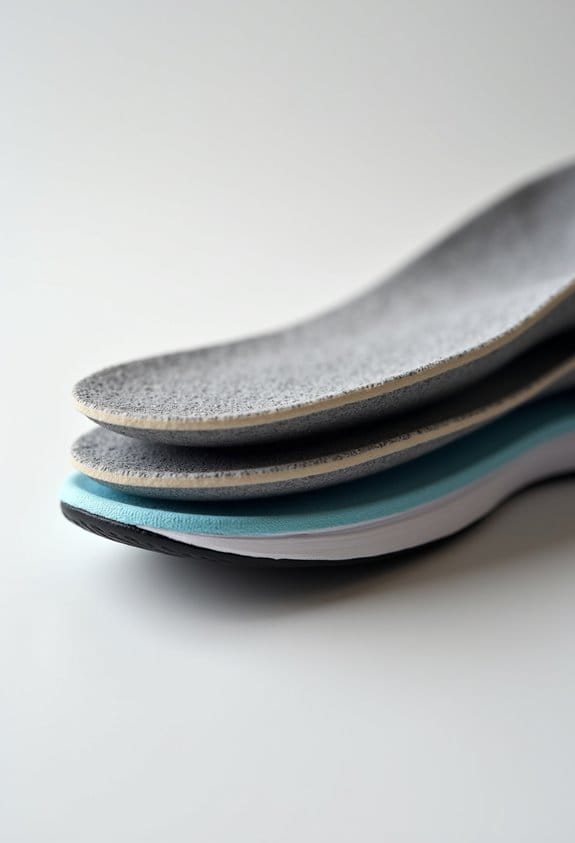
When incorporating arch support insoles into footwear, you must recognize that their additional thickness increases the internal shoe volume, which often causes a tighter fit. Arch supports typically add 3 to 5 millimeters of thickness, which may affect how the shoe inserts fit inside your shoe. Removing existing sock liners or insoles before placing arch support insoles can help maintain adequate space, preventing fit issues. Shoes designed with removable insoles accommodate arch supports better, allowing the shoe size to remain effective without sacrificing comfort. Failing to account for this added bulk may result in a shoe that feels too snug, causing friction and pressure points. Consequently, always try shoes with arch support insoles inserted to verify they fit inside correctly and do not require a larger shoe size. Additionally, many insoles feature trim-to-fit designs that allow customization to improve fit and comfort inside different shoes.
Differences Between Insoles, Orthotics, and Shoe Inserts

Although insoles, orthotics, and shoe inserts all serve to improve foot comfort and support, they differ significantly in design, purpose, and impact on shoe fit. Insoles are removable footbeds offering cushioning and support without typically affecting shoe size. Custom orthotics, however, are specifically designed devices tailored to your foot’s biomechanics that may require a larger shoe size due to their thickness and structure. Shoe inserts, including pads and cushions, enhance comfort and fit but do not alter shoe size. When using custom orthotics, it is important to remove existing insoles to avoid excessive tightness, which might misleadingly suggest a change in shoe size. Evaluating the fit of any insole or orthotic alongside your shoe is essential for maintaining proper foot health and ensuring consistent comfort during wear. Many insoles, including the Spenco range, feature trim-to-fit designs allowing for easy customization to ensure optimal comfort and fit.
Understanding Shoe Size: Length, Width, and Depth

Shoe size depends on three specific dimensions: length, width, and depth, each affecting how a shoe fits and accommodates foot support devices. Length measures the distance from heel to toe and is expressed in inches or centimeters, varying by regional standards like US or European sizing. Width refers to the measurement across the ball of the foot and typically comes in standard or wide options, influencing fit and comfort. Depth describes the internal vertical space within the shoe, which is essential for fitting arch support insoles without causing discomfort or instability. Understanding these dimensions helps you select shoes that properly fit your foot and accommodate additional support elements, ensuring comfort and functionality when using arch support insoles. Additionally, selecting insoles with appropriate ergonomic arch support can enhance posture and reduce discomfort.
When and Why You Might Need Larger Shoes With Insoles

Because arch support insoles increase the internal thickness of a shoe, you may need to select a larger size to maintain proper fit and comfort. Insoles raise the foot position inside the shoe, which can cause a snug or constrictive fit if the original shoe size remains unchanged. When adding substantial arch support, such as custom orthotics, it is often necessary to choose shoes with greater depth or a wider toe box to accommodate the increased volume. If you notice discomfort or limited toe movement after inserting insoles, consider trying shoes that are one half to a full size larger. Always assess fit by trying shoes with insoles inserted, as this guarantees an accurate evaluation of needed adjustments in shoe size. Choosing insoles with customizable fits ensures better comfort without excessively altering the shoe size.
The Role of Removable Insoles in Shoe Adjustment

Utilizing removable insoles enables you to adapt your shoe’s internal volume effectively when adding arch support without immediately needing a larger size. By removing the factory insoles, you create necessary space for arch support insoles, ensuring a proper fit and preventing uncomfortable pressure points. Many shoes designed for athletic or casual wear include removable insoles, making them compatible with custom or over-the-counter arch support insoles. When properly fitted, removable insoles stabilize your foot within the shoe, minimizing tipping or rocking that could disrupt alignment. This adjustment method allows you to maintain your usual shoe size while benefiting from enhanced support. To achieve ideal results, verify that the arch support insoles lie flat and match the shoe’s contours, thereby preserving comfort and function throughout daily use. Regular checking for wear and tear helps maintain the effectiveness and comfort of your insoles over time.
Selecting Shoes Compatible With Arch Support Insoles
Many types of footwear require careful consideration when integrating arch support insoles, as the additional thickness often affects overall fit and internal volume. When selecting shoes for arch support insoles, prioritize models with removable insoles to accommodate added height without compromising shoe fit. It is vital to assess the toe box, verifying it is sufficiently wide and deep to prevent compression when the insole is inserted. Shoes designed specifically for orthotics typically provide a more suitable toe box and interior space, promoting proper foot alignment. Always try shoes with arch support insoles inside, as the foot may sit higher, necessitating a half size larger shoe to maintain comfort. This process guarantees adequate room for natural foot movement and prevents tightness around the heel and forefoot areas. Additionally, choosing gel cushions with customized fitting options can help ensure optimal comfort and fit within your footwear.
The Impact of Thicker Insoles on Footwear Comfort
When thicker arch support insoles are inserted, they increase cushioning and elevate the foot by approximately 3 to 7 millimeters, which may cause the shoe to feel tighter than usual. These thicker insoles often include deep heel cups and enhanced arch support to stabilize the foot and alleviate common foot problems. However, the added volume inside the shoe can reduce space, causing discomfort in tightly fitted footwear. To maintain footwear comfort, it is important to remove existing insoles if possible, especially when adding thicker insoles. Shoes with removable footbeds better accommodate these modifications without compromising fit. If the shoe becomes too snug, consider sizing up or choosing footwear with a wider toe box to prevent constriction and guarantee proper support from the insoles. Additionally, many insoles feature a trim-to-fit design which allows customization to better fit your shoe and provide optimal comfort without overcrowding.
Custom Vs Over-The-Counter Arch Support Solutions
Choosing between custom and over-the-counter arch support solutions requires understanding their differences in design, fit, and impact on shoe size. Custom orthotics are molded specifically to the contours of your feet, providing precise arch support with minimal added volume. This tailored fit generally maintains your existing shoe size without compromising shoe fit. In contrast, over-the-counter insoles come in standard sizes and thicknesses, and their bulkier construction often necessitates sizing up by a half or full shoe size to accommodate increased height or width. If your shoes are tight, over-the-counter insoles might reduce comfort without adjustments to shoe size. Both types improve foot alignment and pressure distribution, but custom orthotics offer a lower profile that better preserves shoe fit, while over-the-counter insoles may require modifications to shoe size for peak comfort. Additionally, some over-the-counter options provide adjustable layers to customize height and support, which may further influence the fit of your shoes.
Tips for Measuring Your Foot and Shoe for Proper Insole Fit
Accurate foot measurement requires standing on a flat surface with the heel firmly against a wall, placing a piece of paper beneath the foot for marking. Mark the tip of the longest toe and measure the distance from the wall to this mark to determine your foot length. When selecting a type of shoe, remove any existing insoles before inserting arch support insoles to avoid crowding and guarantee proper fit. Make sure the shoe offers sufficient width and depth to accommodate the added bulk of the insoles without causing tightness. Always try shoes on while wearing arch support insoles to verify comfort and sizing. Consider choosing half sizes larger if the additional insole height restricts toe movement or makes the shoe feel tight. Also, selecting insoles with trim-to-fit designs allows for a customized fit that can help prevent discomfort caused by improper sizing.
Balancing Shoe Style and Orthotic Functionality
Although arch support insoles enhance foot stability and reduce discomfort, you must carefully balance shoe style with orthotic functionality to guarantee proper fit and support. Arch support insoles typically add thickness inside the shoe, which can impact shoe fit and comfort. Shoes with removable insoles generally provide better accommodation for orthotic insoles, ensuring accurate fit without changing your nominal size. You may notice a snugger fit when using insoles, especially in narrow or tight shoe styles, and might consider slightly larger sizes for adequate space. It is essential to try shoes with your orthotic insoles before purchase, ensuring compatibility between style, size, and insole thickness. Proper balancing prevents discomfort and maintains both the functional benefits of arch support insoles and the desired shoe appearance. Using insoles made from moisture-wicking materials can also improve comfort by reducing sweat buildup and odor inside the shoe.
Frequently Asked Questions
Does Foot Arch Affect Shoe Size?
Foot shape, arch height, and foot volume influence shoe size, often requiring size adjustment. Higher arches increase foot volume, altering fit and comfort levels. Proper sizing balances foot shape and arch height for ideal comfort and stability.
Are Arch Support Insoles Good or Bad?
Arch support insoles offer arch benefits by improving foot alignment, enhancing shoe comfort, and providing pain relief for conditions like plantar fasciitis. However, improper sizing may cause discomfort, so selecting the right insole is essential for ideal results.
What Insoles Do Podiatrists Recommend?
Podiatrist recommendations typically include custom orthotics tailored to arch types, using materials like gel, memory foam, or specialized cushioning. These insoles optimize foot health by providing necessary support, improving alignment, and alleviating pain associated with various foot conditions.
Should I Get Bigger Shoes for Orthotics?
Although insole thickness and arch height can alter shoe width perception, bigger shoes are not typically necessary; ideal foot comfort depends on proper shoe volume and removing existing insoles, ensuring orthotics fit without compromising space.


