


For small apartments, optimize shoe storage with vertical shoe racks made from reclaimed wood, spacing shelves 8 to 12 inches deep for various shoe sizes. Install hanging organizers on doors with 12 to 36 compartments, or use wall-mounted floating shelves spaced 10 to 15 inches apart for airflow. Under-bed clear bins, 6 to 12 inches high, protect shoes from dust while saving floor space. Compact slim cabinets under 12 inches deep also maximize storage capacity. Further efficient solutions await detailed exploration here.
Key Takeaways
- Build vertical shoe racks from reclaimed wood like pallets or ladders to maximize vertical space without using floor area.
- Use over-the-door hanging shoe organizers with fabric pockets or clear vinyl pouches for compact, visible storage.
- Install wall-mounted floating shelves spaced 10 to 15 inches apart for airflow and easy shoe display.
- Utilize under-bed pull-out bins or drawers with clear sides to discreetly store up to a dozen pairs and save floor space.
- Create narrow, slim shoe cabinets under 12 inches deep to fit tight spaces while holding multiple pairs on adjustable shelves.
Vertical Shoe Racks Using Reclaimed Materials

Utilizing reclaimed materials like old wooden pallets or ladders, you can construct vertical shoe racks that optimize available height without occupying floor space. Employing creative upcycling techniques, you should first measure your wall space, then customize shelf dimensions typically ranging from 8 to 12 inches in depth to fit various shoe sizes. Cut and sand the wooden slats to reduce splinters and guarantee smooth shelf surfaces. Securely attaching shelves between ladder rungs or pallet frames increases storage efficiency. Anchoring the structure firmly to wall studs with heavy-duty screws prevents tipping hazards. Applying paint or stain to the reclaimed wood improves durability and visual integration with existing apartment decor. This approach not only promotes sustainability by repurposing materials, but also allows shelf customization to accommodate shoe collections of diverse heights and widths, maximizing functional storage. Additionally, incorporating anti-tip anchors enhances safety by preventing the rack from tipping over, especially in apartments with limited space.
Hanging Shoe Organizers for Doors and Walls
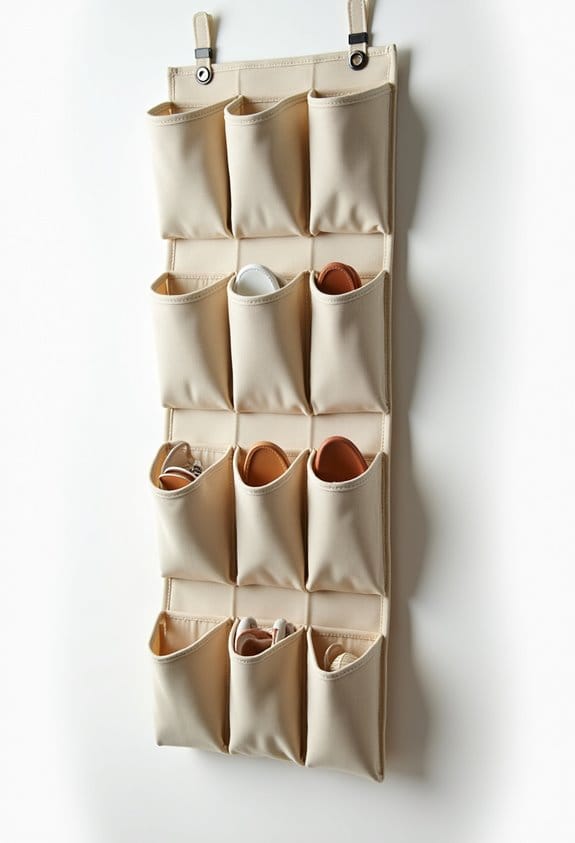
Hanging shoe organizers provide efficient storage solutions by maximizing vertical space on doors and walls, ideal for small living areas. These organizers offer functional designs such as fabric pockets, clear vinyl pouches, or mesh compartments that fit over standard 80-inch doors or attach directly to walls. Over-the-door models typically contain 12 to 36 pockets, accommodating multiple pairs of shoes while preserving floor space. When selecting materials, prioritize stylish materials that complement your room decor, such as neutral-toned fabrics or transparent vinyl for visibility. Adjustable straps or hooks guarantee compatibility with various door thicknesses from 1.5 to 2 inches and diverse wall mounting options. For DIY customization, consider repurposing shoe caddies or installing wall-mounted pegboards. These approaches assure streamlined access to footwear and maintain an organized living area without compromising aesthetics or utility. Many hanging shoe organizers provide breathable mesh pockets that help keep shoes fresh and dust-free.
Under-Bed Storage Solutions for Shoes

When door and wall organizers reach their capacity, under-bed storage solutions offer a practical alternative for shoe organization. You can utilize approximately 30% of your floor space by selecting pull-out drawers or wheeled bins designed specifically for under-bed use. These containers typically hold six to twelve pairs of shoes, depending on their size and layout. To maximize space and ease of access, choose clear storage bins that enable quick visibility of your shoe collection. Most under-bed storage options have a height ranging from six to twelve inches, allowing them to fit under standard bed frames efficiently. Additionally, storing shoes this way protects them from dust and environmental damage, thereby prolonging their lifespan while keeping your living area neat and organized. Opting for storage with durable construction ensures long-lasting use and protection for your footwear.
Wall-Mounted Floating Shelves for Shoes

Maximizing vertical space through wall-mounted floating shelves offers an efficient and streamlined method for shoe storage, especially in areas with limited floor space. When installing floating shelf designs, select sturdy brackets and secure each shelf at heights ranging between 10 to 15 inches apart to accommodate different shoe types. You should tailor shelf lengths from 24 to 36 inches depending on available wall space and shoe quantity. For shoe display tips, arrange shelves at varying heights to highlight your most-used or visually appealing footwear. Guarantee shoes are spaced evenly to facilitate airflow and reduce dust accumulation. This elevated storage method simplifies cleaning and maximizes room accessibility, as it keeps floor space unobstructed. Overall, floating shelves offer customizable, practical, and aesthetic advantages when organizing shoes in small apartments. Consider using stackable shoe storage solutions as an additional way to enhance organization and maximize closet space.
Compact and Slim Shoe Cabinet Ideas

How can you efficiently store numerous shoes without occupying excessive floor space? Compact and slim shoe cabinets offer space saving designs specifically tailored for small apartments. With a narrow profile often under 12 inches in depth, these cabinets fit neatly against walls or in narrow entryways, maximizing use of vertical space. Multiple shelves and compartments, sometimes featuring tilt-down drawers, allow for organized storage of 8 to 15 pairs of shoes while keeping them concealed. Choose materials such as wood, metal, or plastic to achieve stylish finishes that complement your apartment’s decor. By selecting dimensions between 24 to 36 inches in height, you guarantee adequate capacity without bulkiness. Employing these compact solutions maintains a tidy appearance and makes shoe access straightforward, optimizing your limited living area effectively. Additionally, considering weight capacity is essential to ensure your shoe rack can safely hold your collection without damage.
Stackable Shoe Bins for Efficient Storage
Why prioritize vertical space in shoe storage? Utilizing vertical space maximizes storage capacity without expanding your apartment’s footprint. Stackable shoe bins offer significant storage versatility by allowing you to configure modular units based on your available space and shoe collection size. Typically made from transparent plastic or breathable mesh, these bins provide clear visibility and airflow while protecting shoes from dust with lids or open tops. To maintain peak condition, follow maintenance tips such as regularly cleaning the bins with a damp cloth and ensuring footwear is dry before storage to prevent odors or mold. Labeling each bin simplifies locating specific pairs quickly. This efficient system keeps floors uncluttered, maximizes closet height usage, and contributes to an orderly, space-saving solution ideal for small apartment living. Choosing breathable materials for the bins enhances airflow and helps prevent moisture build-up inside.
DIY Corner Shoe Shelves for Tight Spaces
Beyond vertical stacking solutions, corner shoe shelves provide an efficient use of underutilized angles in rooms typically limited by floor space. When planning corner shelf designs, measure the corner dimensions precisely, allowing shelves to fit snugly between walls. Customize the height of each shelf to accommodate different shoe types, such as 6 to 8 inches for sandals and 12 to 14 inches for boots. Utilize sturdy materials like plywood or reclaimed wood, cutting boards to triangular or trapezoidal shapes for ideal corner placement. Incorporate customization options by adding adjustable brackets or modular components, enabling future reconfiguration. Consider integrating corner shelves with existing furniture, such as entryway benches or tables, combining storage with seating or surface space. This approach maximizes utility within tight areas, maintaining a neat and accessible shoe organization system suitable for compact apartment living. Adding cushioned insoles with arch support features to shoes stored nearby can enhance comfort after long periods of standing or walking.
Over-the-Door Shoe Storage Options
Over-the-door shoe storage solutions efficiently utilize vertical space on standard-sized doors, allowing you to store up to 30 pairs of shoes without occupying floor area. These organizers typically fit doors measuring 80 inches in height and 30 inches in width, mounting securely with hooks or brackets. You can select from creative designs featuring clear pockets or mesh panels, which enable easy shoe visibility and organization. Several models offer customization options like removable shelves and extra pockets for accessories, enhancing their functionality. Materials vary from durable fabric to plastic, guaranteeing compatibility with different decor styles. When installing, confirm even weight distribution to prevent door damage. Overall, these systems provide a practical, space-saving shoe management strategy suited for small apartments with limited floor area. Additionally, choosing racks with compact designs ensures the best fit for tight living spaces without sacrificing storage capacity.
Storage Benches With Hidden Shoe Compartments
When selecting a storage bench with hidden shoe compartments, consider units that measure between 36 to 48 inches in length, 16 to 20 inches in depth, and 18 to 20 inches in height to fit typical entryways or bedrooms. These benches combine seating with concealed storage, helping you maximize limited space effectively. Look for designs featuring hidden compartments such as drawers or lift-top lids that provide secure, out-of-sight organization for footwear. Incorporating stylish upholstery guarantees the bench aligns with your room’s decor while offering comfort. Choose models that allow quick access to shoes, which helps prevent wear and keeps the area clutter-free. Customizable configurations are beneficial when standard sizes do not meet your storage requirements. Proper use of a storage bench enhances shoe protection and organization, contributing to a tidier living environment in small apartments. Additionally, selecting benches made from durable and breathable materials can help extend the lifespan of your stored shoes by protecting them from dust and moisture.
Rolling Shoe Carts for Versatile Mobility
Mobility enhances shoe storage efficiency, especially in confined living spaces where fixed furniture limits flexibility. Rolling shoe carts provide mobile storage, enabling you to relocate your shoe rack effortlessly within narrow hallways or corners. These carts often feature customizable designs with adjustable shelves, allowing you to set shelf heights between 6 to 12 inches to fit various footwear types, such as boots or sneakers. Compact dimensions, typically 24 inches wide by 12 inches deep, optimize limited spaces without overcrowding. The inclusion of wheels adds convenience for cleaning or accessing other items nearby. Look for models with locking wheels to maintain stability when stationary. Employing a rolling shoe cart guarantees practical, flexible use of your apartment’s footprint while maximizing organized storage and accessibility. Additionally, integrating ventilation features can help prevent odor buildup, keeping your shoes fresh over time.
Labeling and Sorting Shoes in Clear Bins
After establishing a mobility-focused shoe storage solution such as rolling shoe carts, incorporating labeled clear bins enhances organizational efficiency and accessibility in your setup. Use standardized bins, typically 12x16x10 inches, to maximize stacking capability and fit small spaces efficiently. Label each bin by categories like “sneakers,” “formal shoes,” or “seasonal footwear” to expedite shoe identification and retrieval. Clear bins provide visibility of contents, reducing dust exposure and helping maintain shoe condition. Sorting shoes by type or user minimizes clutter and supports a systematic shoe organization approach. This labeling system streamlines seasonal rotation by ensuring only appropriate footwear is accessible throughout the year. Implement consistent labels and sorting protocols to optimize space utilization and maintain an orderly, functional shoe storage environment in compact apartments.
Adjustable Shoe Racks for Growing Collections
Because shoe collections tend to expand over time, using adjustable shoe racks offers a flexible storage solution that grows with your needs. Choose racks featuring expandable designs that allow additional shelves or tiers, optimizing vertical storage in tight spaces typically found in small apartments. Durable materials such as metal or reinforced plastic provide stability and longevity as your shoe inventory increases. Custom shoe solutions include movable components and stackable levels, enabling you to alter rack size and shape according to available space and shoe types. Incorporate stackable options to accommodate various shoe heights without hindering accessibility. These shoe organization tips guarantee efficient use of every inch, maintaining a clutter-free environment. Compact adjustable racks integrate easily into limited areas while supporting a growing shoe collection effectively.
Frequently Asked Questions
How to Store Shoes in a Small Apartment?
Creative storage solutions for shoe organization in small apartments include vertical shelving, under-bed drawers, compact cabinets, and over-the-door organizers. Seasonal rotation in labeled bins also optimizes space, keeping footwear accessible and neatly arranged without clutter.
How to Make a Simple Shoe Rack at Home?
Crafting a shoe rack, a dance of space and style, involves selecting versatile shoe rack materials like wood or PVC. Emphasizing a compact design, one can blend form and function to elegantly organize footwear at home.
What Are Alternatives to Shoe Cabinets?
Alternatives to shoe cabinets include shoe organizers like over-the-door racks and wall-mounted shelves, which save floor space, alongside storage bins such as under-bed containers, offering discreet, efficient, and accessible shoe storage solutions in confined areas.
How to Create Storage in a Small Apartment?
Creating storage in a small apartment truly challenges one’s creativity, revealing the power of space saving solutions. By embracing vertical storage, every inch is optimized, transforming clutter into order and evoking relief amid limited surroundings.


